Afghan Agriculture Threatened by Climate Change; Farmers Seek Urgent Aid
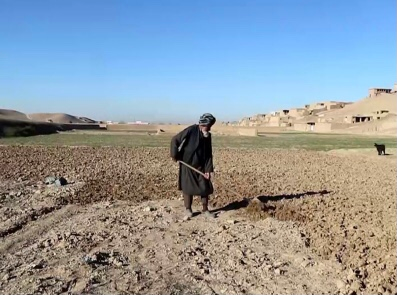
Climate change and natural disasters are increasingly threatening Afghanistan’s agricultural sector. Farmers are reporting significant losses due to droughts and floods and are calling for immediate government support.
Abdul Qayyum, a farmer with 28 years of experience in the northern part of the country, states that recent floods and droughts have severely impacted him. He urges officials and organizations to provide assistance.
“I’ve been farming for several years now. We buy seeds from the market, but I’m still in debt. My land is destroyed by floods on one side and drought on the other. We’re losing money. I have ten dependents at home and don’t know what to do,” Abdul Qayyum told .
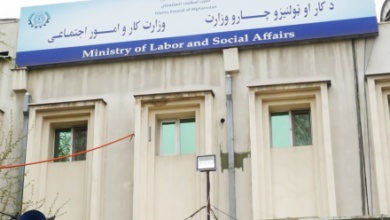
Meanwhile, the Ministry of Agriculture, Irrigation, and Livestock says it has implemented programs to support farmers, including distributing improved seeds, providing drip irrigation equipment, offering technical training, and establishing marketing centers.
Ghulam Mohammad Kazem Shahamat, spokesperson for the Ministry of Agriculture, Irrigation, and Livestock, stated, “Following the decree from Amir al-Muminin to ban opium cultivation in the country, thousands of farmers have benefited from alternative livelihood programs in various agricultural, irrigation, and livestock sectors through the Ministry of Agriculture, Irrigation, and Livestock of the Islamic Emirate of Afghanistan and international aid and implementing organizations.”
The Afghanistan Chamber of Agriculture and Livestock highlights the growth and development of dense orchards, soybeans, asafetida (hing), and saffron as alternative crops in the country’s agricultural activities. They believe that if farmers receive support from the government and international organizations, Afghanistan’s agricultural sector will witness significant growth in various areas.
Wasim Safi, head of the executive board of the Afghanistan Chamber of Agriculture and Livestock, said, “It was stated that poppy cultivation should be stopped, and alternative crops should be found and cultivated instead. Fortunately, you can see that our saffron has had extensive growth, and we’ve had very good and high-quality exports because our products are organic. In addition, another sector that has grown is asafetida (hing). Asafetida has managed to find a good position.”
It’s worth noting that in recent years, Afghanistan has seen an increased focus on alternative cultivation instead of illicit drugs.