Afghan Returnees Face Hardship Amid Forced Deportations from Iran, Pakistan
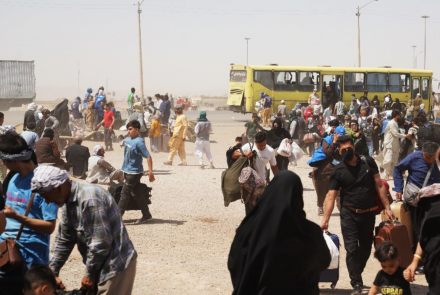
With the increasing deportation of Afghan migrants from neighboring countries, a number of Afghan citizens have returned to the country after years of residing in Pakistan and Iran.
Abdul Sattar, one of the returnees who came back from Pakistan yesterday, says that after years of living there, the Pakistani government has asked them to leave the country.
Abdul Sattar says: “It’s out of necessity; there is neither work nor livelihood here. There must be opportunities for jobs, livelihood, and shelter, because this is a problem for everyone. No one can find a proper job or life for themselves and their children. This is our request from the Islamic Emirate.”
Likewise, Mohammad Ismail, a resident of Balkh, who had migrated to Iran five years ago, has now been forcibly deported.
He expresses concern about the condition of his family and emphasizes that he lacks the necessary resources to restart his life.
Mohammad Ismail, a deported migrant from Iran, said: “Our fate must be decided. These are seven or eight of our children; a house and a life must be provided for us together. I am an old man, where should I go and what work can I do?”
Meanwhile, Afghan migrants in Pakistan have also expressed concern over the non-renewal of visas and the lack of clarity regarding their legal status. They are calling for urgent action by the Afghan government and cooperation from host countries to resolve their legal and residency problems.
Atiqullah Mansour, an Afghan migrant in Pakistan, said: “Among the current issues faced by Afghan migrants are the non-renewal and high cost of Pakistani visas, contradictory reports about the extension or cancellation of POR cards, and UNHCR’s lack of attention to migrants with pending cases.”
Malik Khan Shinwari, another Afghan migrant in Pakistan, added: “In Punjab, Balochistan, and other areas of Pakistan, Afghan migrants are harassed and detained by the police.”
Many of these returnees have come back without preparation and are facing severe shortages of shelter, employment opportunities, healthcare, and education services, making their reintegration into society difficult.
International organizations have repeatedly warned that if the interim government and aid agencies do not act to meet the urgent needs of these individuals, the situation could lead to a major humanitarian crisis.