Fig Farmers in Kandahar Struggle as Export Barriers Lower Prices
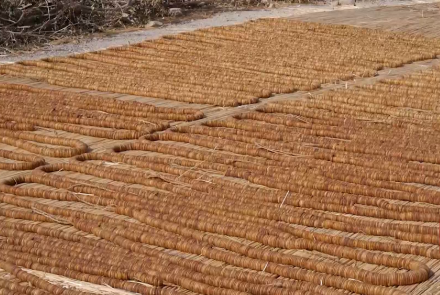
In the Nili area of Kandahar’s Shah Wali Kot district, Awal Khan and his fellow workers are busy harvesting, sorting, and preparing figs.
He says that during the harvesting, drying, and packaging process, they consider all market demands.
Worker Awal Khan says: “We have received professional training in picking, sorting, and standard packaging of figs. Our work meets quality standards.”
Another worker, Abdul Hanan, adds: “These are figs from Shah Wali Kot in Kandahar, there’s no other place in the world with figs like these. They deserve proper attention.”
Shah Wali Kot district, known for its vast fig orchards, has left many orchard owners worried about the lack of export opportunities.
They say that although production is high, prices remain low due to the inability to export. They are calling on the Islamic Emirate to address these issues.
Fig trader Mohammad Din Mohammadi also says: “The prices of our figs are so low that they don’t even cover our costs. We request support in marketing and selling our figs.”
Fig grower Toryalai stated: “We ask neighboring countries and the world to separate politics from business and take steps to boost trade. This is also our request to the Islamic Emirate.”
Mohammad Khalid Zafaran, head of the Kandahar Farmers’ Union, expressed his concern: “Every year during our harvest season, our trade routes are blocked. There’s no effort to market our crops, and our farmers suffer losses. These problems must be resolved.”
Officials report a 40% increase in fig production in Kandahar this year compared to last and say they are working to ease the export process.
Fig orchards in Kandahar cover 15,000 hectares, yielding up to 135 metric tons annually.
In the past, dried fruits from southern provinces, especially figs, were exported in large quantities to India and Pakistan. However, the closure of the Wagah border and high tariffs imposed by Pakistan have severely impacted fig exports to both countries.