Worsening Hunger in Afghanistan Amid Crisis, Aid Shortfalls
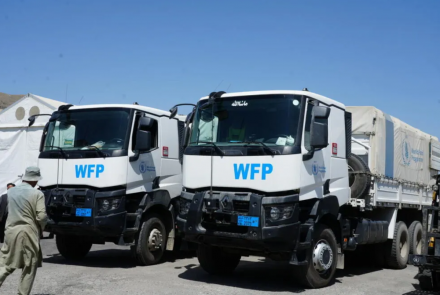
While the economic crisis, successive droughts, and the forced return of thousands of Afghan migrants have placed additional pressure on the country’s limited domestic resources, the World Food Programme (WFP) has warned that the hunger situation in Afghanistan is worsening by the day.
In its latest report, this UN-affiliated agency stated that women, children, and returnees from neighboring countries are the most vulnerable groups in this crisis.
Ziauddin Safi, the WFP communications officer, said: “For the next six months, the World Food Programme in Afghanistan needs nearly 540 million US dollars to carry out its programs aimed at reaching the most vulnerable Afghans across the country.”
Meanwhile, some economic experts believe that for long-term economic growth, investment in infrastructure projects is essential.
Mir Shaker Yaqubi, an economic affairs expert, said: “These aids are humanitarian and prevent a serious crisis, but they cannot in any way be considered as a fundamental solution to Afghanistan’s economic problems. These aids become effective when they take on a developmental shape and positively impact development, welfare, and economic comfort.”
Sayed Masood, another economic affairs expert, also stated: “Afghanistan’s crisis is not mainly an economic one. We have the facts and elements necessary to grow and organize the economy. This was also the case in the past. In reality, Afghanistan’s crisis is a political one, especially with the current global and regional engagement, which is preventing developmental projects from moving forward.”
The Ministry of Economy also considers the continuation of aid from international relief organizations to be beneficial to the country under current conditions.
Abdul Latif Nazari, Deputy Minister of Economy, said: “Humanitarian aid is a serious and essential need under the current circumstances, particularly with the return of migrants from neighboring countries. Therefore, our request is that international aid organizations and the global community continue their humanitarian and emergency assistance to the people of Afghanistan.”
Previously, the United Nations had requested over two billion dollars to provide aid to approximately 23 million people in Afghanistan.