Afghanistan’s Cotton Exports Decline Amid Ongoing Challenges
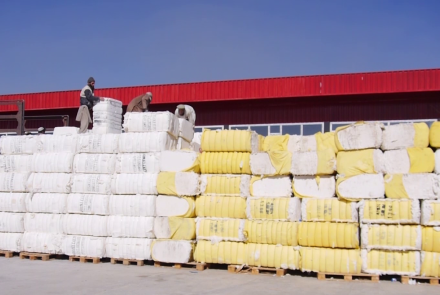
Cotton is considered one of Afghanistan’s most important agricultural and export products, playing a significant role in the country’s economy, job creation, and strengthening of domestic industry.
However, the sector faces challenges such as drought, water shortages, lack of advanced technology, transit issues, and market restrictions.
Recent statistics from the Ministry of Industry and Commerce show a sharp decline in cotton exports. Between 2024 and 2025, there was a decrease in exports valued at $132 million.
Akhundzada Abdul Salam Jawad, spokesperson for the Ministry of Industry and Commerce, stated: “Afghan cotton has been exported to countries including Pakistan, Iran, Kazakhstan, Uzbekistan, China, India, the United Arab Emirates, Iraq, Turkey, Australia, and others. The exports amounted to 104,000 tons, valued at $86 million.”
Meanwhile, the Afghanistan Chamber of Agriculture and Livestock, while confirming the existing challenges in the cotton sector, assures that it is working to market and expand the cultivation of this valuable crop.
Previously Iran, and more recently Bangladesh, have shown interest in purchasing Afghan cotton, and negotiations between Kabul and Tehran have led to certain agreements in this regard.
Waseem Safi, CEO of the Chamber of Agriculture and Livestock, said: “Cotton, or Afghanistan’s ‘white gold,’ holds special importance for us. If our farmers grow more of it, we can not only export it but also use it in the textile sector, extract oil from its seeds, and use its byproducts as animal feed.”
In addition, economic experts believe that investment in processing, the establishment of standard factories, and the expansion of export markets can help increase the value of Afghan cotton.
Mohammad Asif Stanekzai, an economic analyst, added: “This is Afghanistan’s traditional production, and the country can earn significant revenue through it. Our request to the government is to provide improved seeds and purchase quality machinery and deploy specialized teams for its cultivation and production.”
According to the Cotton Union, there are currently 150 active cotton processing factories in the provinces of Helmand, Kandahar, Mazar, and Kunduz, providing employment for over 13,000 individuals.