Japanese Ambassador: Afghanistan’s Stability Crucial for Region and World
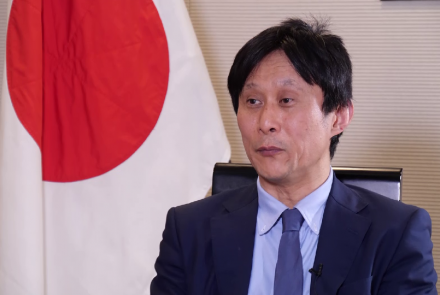
Japan’s Ambassador to Kabul, in an interview said that despite not formally recognizing Afghanistan’s current government, Japan continues to engage with the country and remains focused on humanitarian assistance.
According to him, although formal diplomatic relations between the two countries are not in place, Japan’s embassy in Kabul remains active and meetings with Afghan officials are ongoing.
Masamoto Kenichi, Japan’s Ambassador to Kabul, said: “Japan continues to engage itself in Afghanistan. We don’t have a formal diplomatic relations, but we have an embassy here.”
The ambassador also stated that Japan cooperates with the international community within the framework of the Doha Process regarding Afghanistan’s future, emphasizing issues such as peace, stability, human rights, and counter-narcotics efforts.
Mr. Kenichi added that progress has been made toward Afghanistan’s reintegration into the international community, and that the international community has further opportunities to expand engagement with the country. He stressed that Afghanistan’s stability is important for both regional and global stability.
“Japan belongs to actively participate in what we call Doha process. Doha process is the process with the objective of Afghanistan or reintegrating Afghanistan into the international community. And this process is participated by many countries, including regional countries and Western countries, and the UN is coordinating the process,” he said.
Kenichi further noted that visa services in Kabul have not yet resumed, and Afghan citizens must apply at Japanese embassies or consulates in neighboring countries.
Regarding Afghanistan–Pakistan relations, he said Japan does not play a direct mediation role but supports dialogue and de-escalation between the two countries.
“I understand that regional countries, including Qatar, Turkey, Saudi Arabia, and Iran, are supporting the playing a mediating role. And also, other countries, regional countries and other countries, to encourage,” he stated.
The ambassador added that since 2021, Tokyo has allocated approximately $600 million in humanitarian aid to Afghanistan, covering sectors such as health, drinking water, education, agriculture, and counter-narcotics.
On major development projects, including the Kabul water supply project, he said that under current conditions, Japan’s policy is focused on humanitarian assistance, and large-scale development projects are not a priority at this time.