WFP Warns Crossing Closures Could Disrupt Food Aid in Afghanistan
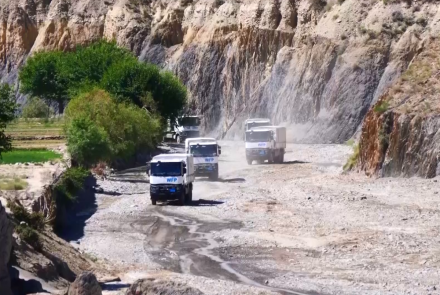
The World Food Programme (WFP) has stated that its humanitarian operations in Afghanistan could be affected if more crossings are closed, warning that such a development would increase costs and cause delays in delivering food assistance.
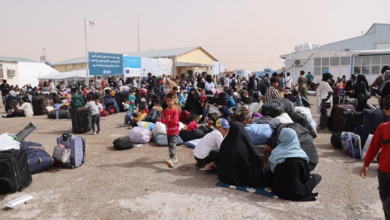
The organization said it is currently assessing alternative supply chain routes to reduce these disruptions. It also noted that the continuing conflict in Iran could force a large number of Afghan refugees to return to Afghanistan, which would further increase humanitarian needs.
Abdul Zuhor Modaber, an economic expert, said in this regard: “The government should have mechanisms in place to manage this problem. It can use monetary policy and consider transfer payments in order to control this issue.”
Meanwhile, the WFP office in Afghanistan reported that the World Food Programme assisted 12.4 million people, including women and children, in Afghanistan last year. It added that the organization will need $313 million over the next six months to respond to the needs of the country’s citizens.
Ziauddin Safi, communications officer for the World Food Programme, said: “For the next six months, the World Food Programme in Afghanistan requires $313 million to be able to assist the most vulnerable Afghans across the country.”
The Ministry of Economy of the Islamic Emirate of Afghanistan also stated that aside from the crossings with Pakistan, all other trade and transit routes with neighboring countries remain active, and commercial exchanges are continuing through those routes.
Abdul Latif Nazari, the deputy minister of Economy, said: “Apart from the problems that exist with Pakistan, the rest of Afghanistan’s crossings continue their activities around the clock. The Ministry of Economy of the Islamic Emirate is also ready to provide all necessary facilities to international organizations in this regard.”
This comes as the WFP’s country representative in Afghanistan had earlier expressed concern over the conflict between Kabul and Islamabad, stating that in provinces affected by the clashes the organization has been forced to temporarily suspend emergency activities, social support, and livelihood programs—a suspension that has deprived 160,000 people of food assistance.