Afghanistan-Pakistan Trade Plunges 40% Amid Continued Route Disruptions
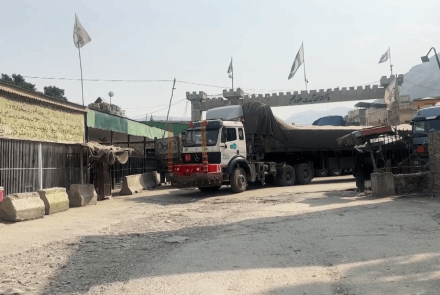
Trade between Afghanistan and Pakistan has dropped by 40 percent, according to the Ministry of Industry and Commerce, mainly due to continued disruptions in commercial routes between Kabul and Islamabad.
Official data shows that in 2024, the total trade volume between the two countries reached $2.461 billion. However, in 2025, it fell to $1.766 billion, marking a significant decline of $695 million.
During the same period, Afghanistan’s exports to Pakistan dropped from $817 million to $505 million, while imports decreased from $1.644 billion to $1.261 billion.
Ministry spokesperson Akhundzada Abdul Salam Jawad said: “In 2024, imports from Pakistan were valued at $1.644 billion, but in 2025, they declined to $1.261 billion. The figures clearly show a steep reduction in trade compared to the previous year.”
Economic analysts stress that Afghanistan should not rely on a single trade partner or transit route. They argue that developing alternative corridors through Iran, Central Asia, and air cargo links could reduce dependency on Pakistan and contribute to long-term economic stability.
Mir Shakir Yaqubi, an economic affairs expert, said: “To ensure trade security in Afghanistan, we must avoid over-dependence on one country. Exploring and developing alternatives will lead to stronger economic growth.”
Major commercial crossings between Afghanistan and Pakistan, such as Torkham and Spin Boldak, have remained fully closed for nearly three months due to political tensions on the Pakistani side.
These closures have led to repeated halts in freight movement and financial losses for traders on both sides. So far, neither government has announced a timeline or plan to resolve the issue and restore normal trade flows.