Rainfall in Kunar Worsens Conditions for Earthquake Survivors in Tents
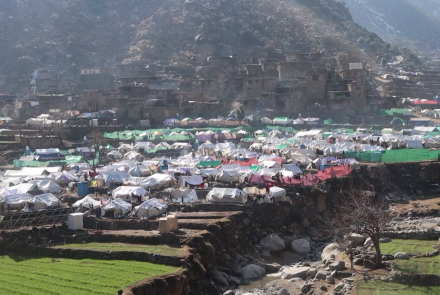
In Kunar, due to the cold weather, a child has died, and dozens of tents belonging to earthquake‑affected families have collapsed because of snowfall.
These earthquake survivors say that living in tents has become extremely challenging, and they are urgently requesting emergency assistance.
One of the recent quake victims in Kunar, Mohammad Rahim, said: “My father and my uncle’s daughter were killed in the earthquake. Five members of our family were injured. The night of the earthquake was very difficult. Conditions that night caused harm to many people. Those memories still do not leave my mind, and even now my heart still trembles.”
Another earthquake survivor in Kunar, Dawood Khan, said: “During these recent rainy days, it was extremely cold. Neither the children nor we were able to sleep. Our tents are filled with mud and water. We need emergency shelter and houses, and these must be provided for us.”
Meanwhile, local officials in Kunar say they have delivered emergency assistance to earthquake victims during the snowfall and rains, and they are trying through the Islamic Emirate and supporting organizations to build permanent shelters for them.
Mohammad Mobeen Maftoon, Director of Preparedness and Response to Natural Disasters in Kunar, said: “Because of the recent precipitation, a large number of earthquake victims’ tents collapsed. Our aid teams went to the affected areas and re‑erected the tents. Where tents were unusable, we provided new ones. In the Shamash area of Mazar‑e‑Dari district in Nurgal, one child died due to cold. Special committees have been formed to respond to the shelter needs of the people, and those committees are now active. Some houses have already been completed and handed over, and work on building others is ongoing.”
About five months ago, a deadly earthquake struck Kunar, leaving nearly 2,500 families in mourning.
This devastating earthquake destroyed completely or partially around 7,000 residential homes, hundreds of hectares of agricultural land, schools, madrassas, and health centers.