Afghanistan Issues Work Permits to Over 15,000 Foreign Nationals
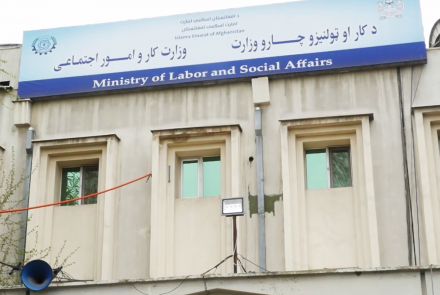
The Ministry of Labor and Social Affairs announced that more than 15,000 foreign nationals have received work permits in Afghanistan over the past four years.
According to the ministry, most of these individuals are from China, Türkiye, and Iran, and the majority are employed in the private sector.
Samiullah Ebrahimi, spokesperson for the Ministry of Labor and Social Affairs, said: “The work permit for foreign nationals is valid for one year. When the year ends, if there is still a need for their work, the permit is renewed; otherwise, they return to their home countries. Employment opportunities are provided for them in the private sector based on demand.”
Meanwhile, at a slipper manufacturing factory in the capital, Mohammad Mia, a Pakistani citizen, has been working in the technical department for the past ten years.
He said he came from Pakistan to Kabul to work in his field of expertise and earn a better income.
Mohammad Mia said: “Thank God, I earn good money here. One thousand Afghanis equals about 4,500 Pakistani rupees, so we benefit a lot. In Pakistan there is neither electricity nor business opportunities; the situation there is difficult, which is why I came here.”
Officials at the factory believe that the presence of skilled foreign workers alongside local employees plays an important role in some production and technical sectors, especially in transferring expertise and experience.
Mohammad Azam Yousufi, a manager at the factory, said: “Their presence is very important for us, both in production and in machinery operations, and it makes our work easier.”
At the same time, Abdul Rahman, an Afghan worker at the factory, said: “He is a good colleague who works actively. If a machine breaks down, he can easily repair it. We have also learned some things from him, and now we can fix certain problems ourselves.”
This comes as growing industrial activity and investment in Afghanistan have increased the demand for skilled labor in certain sectors, and the presence of foreign specialists alongside domestic workers could help improve skills and strengthen the country’s production sector.