Pakistan Political Leaders Criticize Military Policy Toward Afghanistan
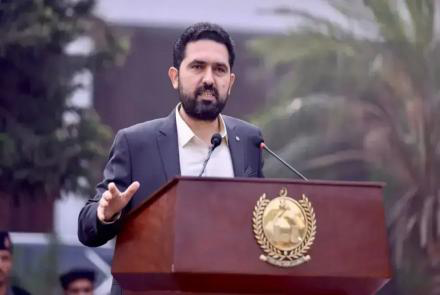
Several political parties and officials in Pakistan, during a meeting in Quetta, criticized the country’s military approach toward neighboring countries, especially Afghanistan.
The Chief Minister of Khyber Pakhtunkhwa told Asim Munir at the meeting that the army’s unilateral actions are unacceptable to the people of Pakistan.
Sohail Afridi, Chief Minister of Khyber Pakhtunkhwa, said: “People of Pakistan! As you know, when we talk about neighboring countries like Afghanistan and criticize policies made behind closed doors, we are told to go to Afghanistan. When we speak about Iran, we are told to go to Iran. Does Pakistan belong to your father? Pakistan belongs to me! I am a citizen of this country, and it is ordinary citizens like me who have formed this ‘government.’”
The spokesperson of the “Movement for the Protection of the Constitution of Pakistan” also said that the movement will never accept any violation of Afghanistan’s sovereignty, territorial integrity, and independence.
Mahmood Khan Achakzai, leader of the opposition in Pakistan’s Senate, also called for a peaceful resolution of tensions with Afghanistan.
Hussain Ahmad Yousafzai, spokesperson of the same movement, added: “From this platform today, I announce to those forces that regarding Afghanistan’s sovereignty, territorial integrity, and independence, we will never compromise with you. Any Pashtun or Afghan who does not respect Afghanistan’s territorial integrity, peace, and sovereignty—we will stand against them.”
On the other hand, Faisal Niaz Tirmizi, Pakistan’s ambassador to Russia, said that Islamabad has asked Moscow to mediate in the ongoing conflict with Afghanistan.
Meanwhile, Pakistan’s foreign minister, in a recent video, supported his country’s attacks on Afghanistan.
Ishaq Dar, Pakistan’s Foreign Minister, stated: “Pakistan remains firmly committed to eliminating terrorism. Pakistan’s actions inside Afghanistan against the threats of Indian-backed ‘Fitna’ and the TTP are also in line with this objective.”
Meanwhile, the Financial Times, in an editorial, emphasized that the United States should pressure Pakistan’s military leadership—especially Asim Munir—to stop cross-border attacks, while also encouraging the Islamic Emirate of Afghanistan to combat terrorism.
The newspaper warned that if ignored, there is a high risk of a full-scale war between Afghanistan and Pakistan.
Key points highlighted in the Financial Times article include:
The U.S. should pressure Asim Munir to stop cross-border attacks.
The Taliban should be confronted with both incentives and pressure to fight militants.
A full-scale war in Afghanistan would threaten the stability of South and Central Asia.
Rising internal opposition in Pakistan comes as the ceasefire announced by the Pakistani regime on the 24th of the current month is nearing its end. However, the Islamic Emirate of Afghanistan has not specified the duration of the temporary ceasefire, and it remains unclear whether the ceasefire between the two sides will continue or end.