Islamic Emirate pushes industrial self-sufficiency with incentives
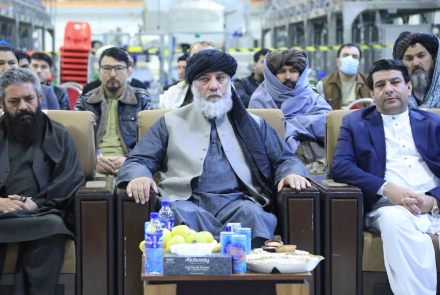
The Minister of Industry and Commerce emphasized efforts toward Afghanistan’s industrial self-sufficiency during a tree-planting campaign in Kabul’s industrial parks.
He said that so far, 2,522 jeribs of land have been distributed to 500 companies across Kabul, Logar and Parwan provinces, and more than 1,500 additional applications are under review.
Nooruddin Azizi added that over 2,500 industrial licenses were issued last year and efforts to simplify procedures are continuing.
The Minister of Industry and Commerce stressed the importance of land distribution to industrialists, saying: “We have provided land to all industrialists and now request them to develop it. Otherwise, under the laws endorsed by the respected Sheikh, the land may be reclaimed or they may face legal consequences.”
Azizi further said that ensuring access to raw materials, expanding facilities and attracting both domestic and foreign investment are among the ministry’s priorities.
He added that plans are in place for foreign investors, including long-term visas and certain exemptions to encourage greater investment.
In this regard, Nooruddin Azizi said: “We are working to grant long-term visas ranging from five to ten years to investors and engineers coming from abroad. In this sector, the Economic Commission of the Prime Minister’s Office, led by Haji Mullah Sahib, will soon announce five-year exemptions.”
Meanwhile, private sector representatives also highlighted the importance of tree planting and its role in economic development and industrial growth.
They said that with some facilities provided by the government, more opportunities for investment in Afghanistan’s industry and trade sectors have emerged.
Abdul Jabbar Safi, Head of the Kabul Industrialists Association, said: “Despite difficult conditions, Afghanistan has been represented globally in trade and investment. This is an achievement for the private sector, and today the world trusts the Ministry of Industry and Commerce and its team.”
Sakhi Ahmad Paiman, a member of the leadership board of the Chamber of Industries and Mines, added: “Every tree we plant today will show its impact in the coming years. Likewise, when we lay the foundation of a factory, its effects may become visible after five to ten years.”
In recent years, the Islamic Emirate has sought to promote industrial growth and attract investment through industrial parks, land distribution and facilitation measures. Experts believe these efforts could contribute to long-term economic self-sufficiency and job creation.