Health Minister Criticizes Budget Misuse, Vows Self-Reliant System
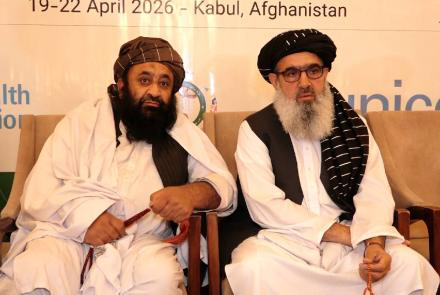
Noor Jalal Jalali, the Minister of Public Health, during a meeting criticized how budgets are being spent in some provincial hospitals and assured efforts toward making the country’s health system self-sufficient based on a new plan by the ministry.
The Ministry of Public Health of the Islamic Emirate, in cooperation with UNICEF and the World Health Organization (WHO), held a four-day meeting in Kabul focused on coordination and capacity building for provincial officials, with discussions centered on challenges and solutions for improving the country’s healthcare system.
At the meeting, Minister Noor Jalal Jalali criticized the way budgets are utilized in some provincial hospitals and reaffirmed efforts to achieve a self-reliant healthcare system based on the ministry’s new planning.
Jalali also emphasized allocating special quotas for specialist positions in underserved provinces and warned of canceling contracts with negligent institutions.
“In southern provinces, more than 150 million (Afghanis) in budget was returned from a single province, while at the same time we were receiving complaints that even basic supplies were not available in provincial hospitals. Some provinces have the capacity to use the budget effectively. Serious efforts must be made to ensure that medicines, equipment, and medical consumables are available in every government health center, and that problems are promptly communicated to relevant authorities,” he said.
Abdulwali Haqqani, Deputy Minister for Health Services, said: “This meeting includes discussions and exchange of views on the provision of healthcare services. The achievements of the past five years, ongoing work, and future plans are also being reviewed to accurately assess the situation in provinces and consider appropriate solutions to improve healthcare services and address challenges.”
Meanwhile, officials from UNICEF and WHO in Afghanistan emphasized continued support and healthcare services aimed at eradicating polio.
Tajudeen Oyewale, UNICEF Representative in Afghanistan, said that due to increasing global needs and pressure on financial resources, funding for the health sector is no longer as strong as before, adding that the United Nations welcomes the announcement and publication of the national health program by the Ministry of Public Health.
Khoshal Zaman, WHO Representative in Afghanistan, said that the number of cases has significantly decreased, noting that in 2025 only about 56 cases were reported worldwide, most of them in Afghanistan and Pakistan. He added that this notable progress is a direct result of sustained global efforts under the polio eradication initiative and warned that without this program, at least 30 million children could have been paralyzed at any given time.
In this program, the Minister of Public Health of the Islamic Emirate of Afghanistan stressed the need to provide more healthcare facilities across the country and described immediate efforts and public cooperation as essential for eliminating polio.