Germany to Continue Deportation of Afghan Migrants

As efforts to deport Afghan migrants continue, Germany’s Interior Minister, Alexander Dobrindt, recently told local media that the deportation of Afghan nationals who have committed crimes will continue on a sustained basis even if it requires direct talks with representatives of the Islamic Emirate of Afghanistan.
In part of the report, Dobrindt is quoted as saying: “Anyone who accuses me of deporting criminals dangerous offenders, rapists, or murderers to Afghanistan should instead ask the opposite question: Would Germany remain a safe country if these individuals were allowed to stay? The answer is no, and that is why they are deported.”
Meanwhile, European media have reported that Austria is considering a plan to deport Afghan migrants via Uzbekistan.
According to these reports, Austria’s interior and foreign ministers are expected to sign an agreement to this effect during an official visit to Uzbekistan on May 7.
European outlets wrote: “Markus Haindl, a representative of Austria’s Interior Ministry, emphasized the importance of this move, saying the agreement is a key step for the transit of individuals subject to deportation, particularly those being returned to Afghanistan. Austria is coordinating with several EU member states, including Denmark, Greece, Germany, and the Netherlands, to establish ‘return centers’ and other external mechanisms to streamline and organize deportation processes.”
Nazar Nazari, a migrant rights activist, said: “European countries should adopt more humane migration policies and not place all the pressure on neighboring countries; they need to pursue a sustainable and humanitarian solution.”
On the other hand, the UN High Commissioner for Refugees (UNHCR) noted that although Pakistan has hosted Afghans for more than four decades, the support environment in recent years has significantly deteriorated, giving way to fear, instability, and vulnerability.
The report also states that undocumented Afghans lack access to education and healthcare, while even documented individuals face restrictions due to financial challenges and fear of deportation.
Ehsan Khan Ahmadzai, a migrant rights activist, said: “In 2025, the forced return of Afghan migrants from Pakistan resumed, and the international community has not adequately fulfilled its responsibilities in this regard.”
Efforts to obtain a comment from the Ministry of Refugees and Repatriation were unsuccessful.
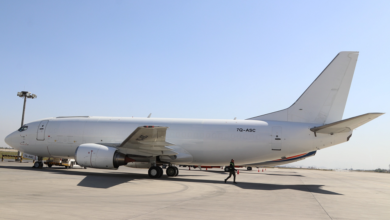
This comes as the United Kingdom has recently considered potential talks with the Islamic Emirate regarding the return of rejected Afghan asylum seekers, while the European Union has also initiated discussions on transferring Afghan migrants. According to reports, Germany deported 81 Afghan migrants on a special flight last year, and last week alone, 25 Afghans were returned to Kabul.