New China–Uzbekistan–Afghanistan Transit Corridor Boosts Trade
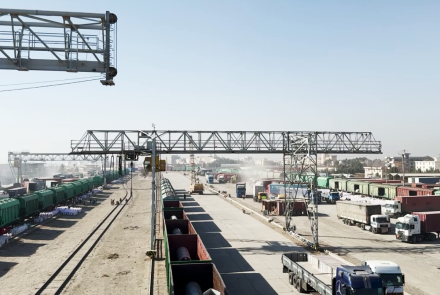
A new transit corridor has been established for transporting goods from China to Afghanistan via Uzbekistan.
Officials from the country’s transport sector and the company “Uztemiryulkonteyner” have stated that this route is a combination of rail and road transport.
According to the plan, containers first move from China by railway, pass through Kazakhstan into Uzbekistan, and then are transported by road through Turkmenistan to the city of Herat in Afghanistan.
Ahmad Ferdous Behgazin, an economic expert, said: “This corridor can be a very effective and beneficial step in improving Afghanistan’s trade and economic indicators, and it can also reduce transportation costs.”
Previously, goods were transported from China to Afghanistan through a longer route, often involving sea transport to Bandar Abbas in Iran and then by land.
The length of this new route is about 7,400 kilometers, and on average, goods are delivered in around 30 days.
Mohammad Nabi Afghan, another economic expert, added: “Previously, goods would arrive via Pakistan and Iran within two to three months; however, through this route, they reach Hairatan port in about 20 to 30 days. Although the costs are slightly higher, work needs to be done on pricing.”
Meanwhile, the Ministry of Public Works, referring to Afghanistan’s geographical position in the region, says that the creation and development of such transit corridors can strengthen the country’s role in connecting Central Asia with South Asia and Iran, and pave the way for Afghanistan to become an important transit route in the region.
Mohammad Ashraf Haqshenas, spokesperson for the ministry, emphasized: “Currently, the transportation of commercial goods through the two corridors, China–Kazakhstan–Uzbekistan–Afghanistan and China–Kyrgyzstan–Uzbekistan–Afghanistan—is ongoing regularly. Given its strategic location, Afghanistan can facilitate regional connectivity and link Central Asian countries with South Asia and Iran.”
With increasing challenges in trade routes, countries in the region are seeking alternatives.
Reports also indicate the possibility of establishing a trilateral corridor between Tatarstan, Turkmenistan, and Afghanistan, a route that could serve as an alternative to the “North–South” corridor, which has faced limitations due to conflicts in Iran.