Afghan repatriation resumes as Torkham closure crisis deepens
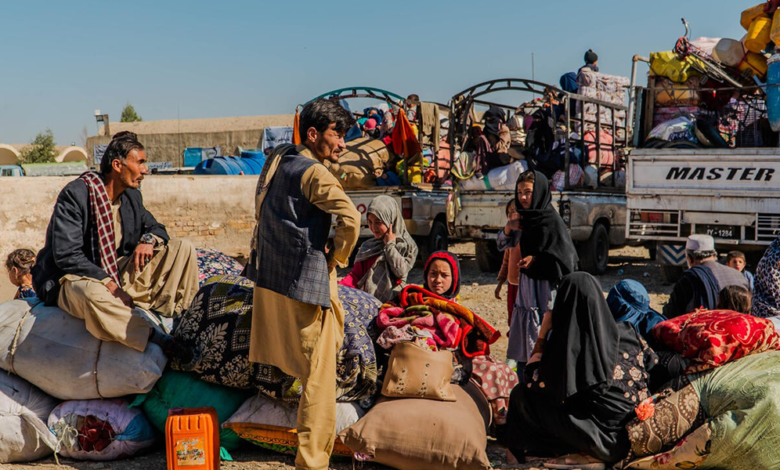
The repatriation of Afghan nationals from Pakistan’s Khyber district has resumed following the Eid al-Adha holidays, with officials reporting that more than 82,500 Afghans have returned to their homeland during the current phase of the government’s repatriation drive.
According to authorities, more than 1.17 million Afghan refugees have returned to Afghanistan since September 2023. The latest phase of the campaign, launched on February 28, has seen thousands of Afghans repatriated through the Torkham crossing, including 1,208 individuals from Khyber district alone.
Officials said the operation is continuing across Pakistan, while enforcement measures against undocumented Afghan nationals have also intensified.
In Khyber, authorities said they registered 42 cases involving Afghans residing illegally in the district and deported them through Torkham after completing legal procedures.
Authorities also sealed 44 businesses in Bara, Jamrud and Landi Kotal that were allegedly being operated unlawfully by Afghan nationals.
The Landi Kotal holding centre remains the focal point of the repatriation process, receiving more than 3,000 Afghan refugees daily from various parts of Pakistan. After biometric verification and registration procedures, the refugees are transferred across the border on the same day.
Crossing closure disrupts trade and transport
While repatriation efforts continue, the prolonged closure of the Torkham crossing to trade and pedestrian traffic has created mounting economic challenges for communities on both sides of the frontier.
Transport Union officials say hundreds of Pakistani drivers, conductors and vehicles remain stranded in Afghanistan. Representatives said they submitted a list to authorities more than a month ago identifying 560 drivers and conductors along with 900 trailers, but little progress has been made in securing their return.
Although some transport workers have managed to return through the Chaman crossing, many remain stuck in Afghanistan. Union leaders warned that trucks and trailers left idle for months have deteriorated, causing significant financial losses and threatening the livelihoods of thousands of families dependent on cross-frontier trade.
Tribal leaders warn of post-Eid protests
Growing frustration over the situation prompted a grand jirga in Landi Kotal attended by political leaders, tribal elders, traders, labour representatives and transport operators.
Participants said the continued suspension of movement and commerce through Torkham had severely damaged the economy of the region, increased unemployment and placed additional financial strain on local communities. They called on authorities to facilitate the immediate return of stranded Pakistani citizens, students, transport workers and vehicles.
The jirga concluded with a joint resolution warning that protests could begin after Eid if the issue remains unresolved. Organisers said demonstrators may block the Pakistan-Afghanistan highway and could also seek to halt the ongoing repatriation process.
Speaking at the gathering, religious leader Mufti Ijaz Shinwari said the closure of key crossings with Afghanistan had pushed many families in the tribal districts into economic hardship. He claimed that more than 1,500 Pakistani trucks and large commercial vehicles, along with drivers, conductors and students, remain stranded in Afghanistan under difficult conditions.
Shinwari said a joint meeting of political groups, tribal elders, traders and transport unions would be held in the coming days to determine further action, including possible protest measures aimed at pressuring authorities to resolve the border impasse.