UN Report Highlights Education Ban, Security and Economic Strains
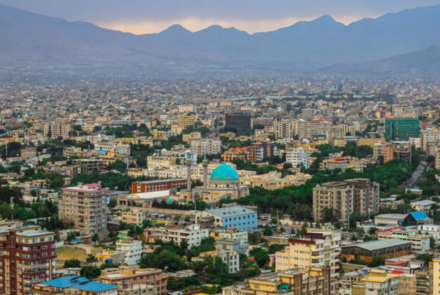
UN Secretary-General António Guterres, in his latest quarterly report on Afghanistan, highlighted the ban on girls’ education, civilian casualties caused by Pakistani airstrikes and shelling along the Hypothetical Durand Line, the displacement of residents in affected areas, the country’s humanitarian and economic challenges, and declining international aid. He warned that Afghanistan is facing worsening humanitarian, economic, and security conditions.
The report, submitted to the UN Security Council and the UN General Assembly, states that around 2.6 million Afghan girls remain out of school, while Afghan female UN employees are still barred from returning to work.
According to the report, the United Nations recorded 3,687 security-related incidents in Afghanistan between February and April 2026, representing a 57.7% increase compared with the same period last year.
However, Guterres noted that these incidents have not posed a significant threat to the Islamic Emirate’s control of the country.
The report further states that 372 civilians were martyred and 392 others injured between January and March 2026 as a result of Pakistani airstrikes and shelling along the Hypothetical Durand Line.
The attacks also displaced nearly 94,000 people, most of them women and children.
Guterres called on Afghanistan and Pakistan to resolve their differences through dialogue, reduce tensions, and restore normal trade and transit links between the two countries.
The report says Afghanistan’s economy remained under pressure during the first months of 2026 due to declining foreign aid, trade disruptions, climate-related shocks, rising inflation, and the large number of returnees from neighboring countries.
According to the report, trade through Pakistan has declined by more than 90 percent since crossing points were closed in October 2025, prompting Afghanistan to increasingly rely on routes through Iran and Central Asia.
The report also notes that Afghanistan’s humanitarian situation remains fragile. An estimated 21.9 million people, or about 45 percent of the population, are expected to require humanitarian assistance in 2026.
Guterres said that although opium poppy cultivation has declined following the Islamic Emirate’s ban on narcotics, many farmers continue to face serious economic difficulties because of the lack of viable alternative livelihoods.
The UN Secretary-General added that UNAMA continues to play a vital role in coordinating humanitarian assistance, facilitating political engagement, and monitoring the human rights situation in Afghanistan.