Afghanistan’s Economic Links with Central Asia: Trade to Strategic Projects
In recent years, Afghanistan has sought to expand its economic and trade ties with Central Asian countries and the Caucasus.
Uzbekistan, Tajikistan, Kazakhstan, Kyrgyzstan, Turkmenistan, and Azerbaijan are among the countries cooperating with Afghanistan in trade, energy, transport, and infrastructure development.
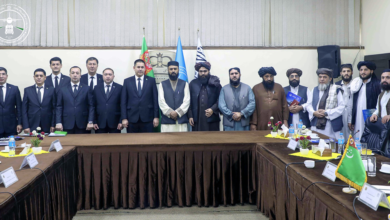
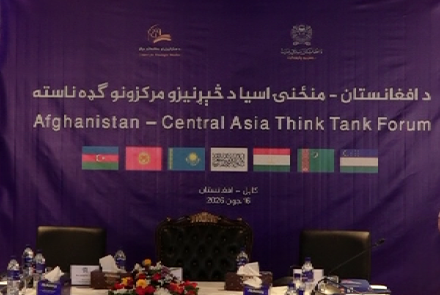
In this context, delegations from these countries traveled to Kabul to participate in the first meeting of the “Strategic Studies Centers and Think Tanks of Afghanistan and Central Asia, Including the Republic of Azerbaijan,” where participants discussed ways to strengthen regional cooperation with Afghanistan.
Addressing the meeting, Amir Khan Muttaqi, Acting Foreign Minister of the Islamic Emirate of Afghanistan, said that Afghanistan’s relations with Central Asian countries and Azerbaijan have expanded in recent years, creating new opportunities for regional and economic cooperation.
Muttaqi added: “As a natural bridge between Central Asia and South Asia, Afghanistan has significant potential for regional connectivity. Projects such as CASA-1000, TAPI, TAP, the Lapis Lazuli Corridor, the Afghan-Trans railway project, and other regional transit routes and joint initiatives should be supported through comprehensive economic studies, forward-looking planning, and research-based assessments.”
Uzbekistan is considered one of Afghanistan’s most important economic partners in Central Asia and holds the largest share of Central Asia’s trade with Afghanistan.
Economic cooperation between Afghanistan and Uzbekistan includes:
- Bilateral trade volume: $1.5 billion, with a target of increasing it to $5 billion.
- Major joint projects: the Hairatan–Mazar-e-Sharif railway and the Trans-Afghan railway project.
- Investments: $1 billion in the Toti Maidan gas project and $240 million in electricity transmission infrastructure.
- Trade agreements worth more than $5 billion signed in the past eight months.
Turkmenistan is also one of Afghanistan’s key energy partners and is involved in the region’s largest energy transmission projects with Afghanistan.
Economic cooperation between Afghanistan and Turkmenistan includes:
- Bilateral trade volume: more than $900 million.
- Joint projects: the TAPI gas pipeline, electricity transmission projects, the Torghundi–Herat railway, and fiber-optic connectivity.
- Investments: $12 million in the Torghundi–Herat railway project.
- Cooperation in the development of border and transit infrastructure.
Kazakhstan is one of Afghanistan’s largest suppliers of wheat and grain and plays a significant role in the country’s food security.
Kazakhstan aims to increase bilateral trade with Afghanistan to $3 billion, and delegations from the country have visited Kabul to advance this goal.
Economic cooperation between Afghanistan and Kazakhstan includes:
- Bilateral trade volume ranging from $500 million to nearly $1 billion.
- One of Afghanistan’s largest suppliers of wheat and grain.
- A major contributor to Afghanistan’s food needs.
- A pledged investment of $500 million in the Torghundi railway sector.
Ahmad Tawfiq Dawari, adviser to the Afghanistan Chamber of Commerce and Investment, highlighted the importance of economic cooperation with Central Asian countries, saying: “Afghanistan currently uses Central Asia as a vital trade corridor, with a significant portion of our commerce reaching Russia and other countries through these routes.”
Tajikistan and Kyrgyzstan cooperate with Afghanistan in energy, transit, and regional projects, with CASA-1000 being one of the most important joint initiatives. However, trade and investment between Afghanistan and Kyrgyzstan remain limited.
Azerbaijan’s economic engagement with Afghanistan remains modest, with no significant investments reported so far. Cooperation is mainly focused on transit through the Caspian Sea and linking Afghanistan to Caucasus and European transport corridors.