Afghanistan-Uzbekistan Rail Freight Doubles in First Five Months
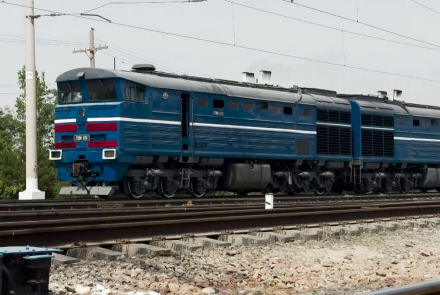
Uzbek railway officials say more than 41,000 freight wagons were transported between Afghanistan and Uzbekistan by rail during the first five months of the current year, nearly doubling the figure recorded during the same period last year.
The shipments carried more than 2.7 million metric tons of goods.
During the same period last year, 20,415 freight wagons were transported between the two countries by rail.
Deputy Head of Uzbekistan’s Surkhandarya Railway said: “During the first five months of 2025, around 20,415 wagons were transported. In the first five months of the current year, that figure has increased to between 40,000 and 41,000 wagons.”
Traders say expanding rail transport reduces shipping costs, shortens delivery times, improves the safety of cargo, and eases congestion on transit routes.
Zabihullah Kahmardi, a trader, said: “Rail transport reduces both costs and transit time. While trucks may take up to 15 days for a round trip, a freight wagon can be unloaded, loaded, and cross the border by rail within four to five days.”
Another trader, Esmatullah Ishaqzai, said: “It will prevent the loss of time, reduce transportation costs, and allow goods to be moved more safely from one place to another.”
Meanwhile, other traders say expanding the railway network and implementing the Afghan-Trans railway project would strengthen Afghanistan’s role as a regional transit hub and improve connectivity between countries in the region.
Trader Asadullah Asadi said: “Connecting the Afghan-Trans railway to the Torkham border crossing and Iran would be a strategic shift in the region’s economic geography. The project would transform Afghanistan from a landlocked mountainous country into a key transit corridor linking Central and South Asia.”
In addition to imports and exports between Afghanistan and Uzbekistan, the railway also handles transit goods from Russia, Belarus, and Kazakhstan, further increasing the importance of the Afghanistan-Uzbekistan rail corridor for regional trade and transit.