Balkh Exports to Regional Markets Surge in First Quarter
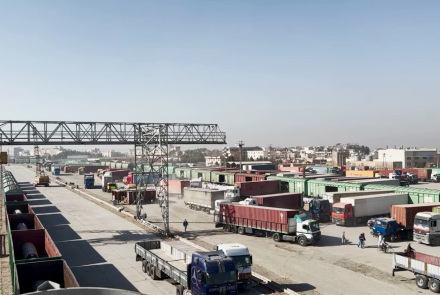
Officials at the Balkh Chamber of Commerce and Investment say goods worth more than $67 million were exported from the province to foreign markets during the first three months of the current solar year.
According to the officials, exports during the period were more than three times higher than the $21 million recorded during the same period last year.
Carpets, kilims, Karakul pelts, and fresh and dried fruits are among Balkh’s main export products, which are shipped to markets across the region.
Ahmad Shakib Akbari, executive director of the Balkh Chamber of Commerce and Investment, said: “Compared with the first quarter of last year, exports to regional countries exceeded $67 million during the first quarter of 1405, reflecting a 67 percent increase in exports.”
Officials said improved trade facilitation and the signing of cooperation agreements with regional countries, particularly in Central Asia, have been among the main factors behind the growth.
Haroon Rashid Qazi, deputy head of the Balkh Chamber of Commerce and Investment, said: “This is the result of the agreements we have signed with neighboring and partner countries, including Iran, Uzbekistan, Kyrgyzstan, Kazakhstan, Türkiye, and India.”
Meanwhile, local officials in Uzbekistan’s Surxondaryo Province said Uzbekistan exported goods worth $51 million to Afghanistan during the first five months of the current year.
They added that Afghanistan exported goods worth $81 million, including more than 200 different products, to Uzbekistan during the same period.
The governor of Surxondaryo Province’s adviser for Asian countries said: “During the first five months of the current year, our producers exported goods worth $51 million to Afghanistan, including 166 types of products. At the same time, we imported goods worth $81 million, covering more than 200 different products, from Afghanistan.”
Traders described the Central Asian route as the safest and most reliable corridor for Afghanistan’s trade.
They called for lower or waived export tariffs, the organization of trade exhibitions, and the creation of new markets abroad for Afghan products.
Trader Mohammad Popal said: “First, export tariffs on our products should be removed. Second, our products need better marketing. We also need opportunities to hold direct meetings and conferences with foreign businesspeople so we can sign contracts with them directly.”
In recent years, Afghanistan has focused on strengthening economic ties with Central Asian countries, facilitating trade, and expanding exports through its northern trade routes.