Afghanistan Has 24 Active or Near-Completed Water Dams, Ministry Says
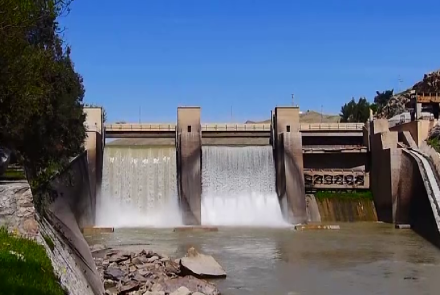
Afghanistan’s Ministry of Energy and Water says 24 small and large water dams across the country are either operational or nearing completion.
According to ministry officials, the dams are used for hydropower generation, irrigation of agricultural land, and improved water resource management.
Officials added that work is continuing on several major projects, including the Bakhshabad Dam, Paltuni Dam, Shaflogh Dam, the Qosh Tepa Canal project in northern Afghanistan, the Shahi Canal in the east, and the Nahr-e-Seraj Canal in the south.
Matiullah Abid, spokesperson for the Ministry of Energy and Water, said: “There are nearly 24 medium and large dams in the country, most of which are operational. In addition to generating hundreds of megawatts of electricity, they also irrigate thousands of hectares of farmland.”
Economic analysts say that despite Afghanistan’s abundant water resources, the country continues to face challenges due to inefficient water management and limited domestic electricity production.
They believe that building large dams could play a significant role in increasing domestic power generation, boosting agricultural production, preventing water wastage, and reducing Afghanistan’s dependence on imported electricity.
Economic analyst Abdullah Pohan said: “The government should ensure that dam construction meets international standards and is carried out with high quality. Contracts awarded to companies must also be transparent so that these projects deliver long-term benefits.”
Another economic analyst, Sayed Masoud, said: “If we properly manage our water and land resources, we could produce enough food for 176 million people. We would also be able to generate sufficient electricity and even export power. Afghanistan sends around 14.5 cubic meters of water to Pakistan, and that volume could be used to produce electricity instead.”
Afghanistan is considered rich in water resources. However, a significant portion of the country’s water flows into neighboring countries each year due to the lack of dams and adequate water infrastructure.