Islamic Emirate Expands PhD and Master’s Programs at Public Universities
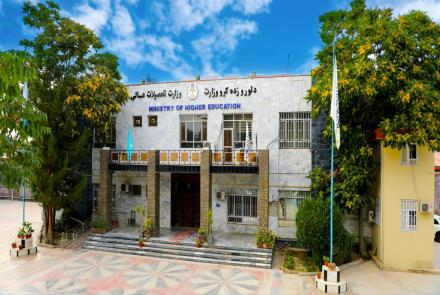
The Ministry of Higher Education says 31 doctoral (PhD) programs are currently being offered at five public universities in a range of fields, including Islamic studies, engineering, computer science, agriculture, health sciences, law, languages, literature, and mathematics.
The ministry added that 116 master’s programs have also been established at 10 public universities, while efforts are underway to launch 45 additional master’s programs and nine new doctoral programs at other public universities across the country.
Fields currently offered at the doctoral level include:
Islamic Studies and Law
Languages and Literature
Engineering
Computer Science and Artificial Intelligence
Mathematics
Agriculture and Veterinary Sciences
Public Health and Microbiology
Afghan Studies
The Ministry of Higher Education’s Publications and Public Relations Department told that the Islamic Emirate has developed a plan to expand postgraduate education and has already taken practical steps toward that goal.
According to the ministry, since the Islamic Emirate came to power, numerous master’s and doctoral programs have been established at public universities. It also said the Afghanistan International Islamic University was created to expand higher education opportunities. The process of launching 45 new master’s programs and nine new doctoral programs at public universities is currently underway.
Meanwhile, several university lecturers said the expansion of master’s and doctoral programs should be accompanied by stronger academic and educational capacity within the country.
They believe greater investment in higher education would improve the quality of teaching, strengthen scientific research, and help train qualified specialists.
Naqibullah Nouri, a university lecturer, said: “We need careful planning so that within the next ten years we can train academic staff capable of teaching at these levels using domestic expertise, eliminating the need for foreign professors.”
Another university lecturer, Omar Mukhtar Nikzad, said: “The government should send lecturers and young academics abroad for capacity-building programs. In the past, we had good cooperation with friendly and regional countries in this area.”
Although Afghanistan’s higher education sector has expanded significantly over the past two decades, experts say it still requires greater investment, stronger academic capacity, and improved educational and research facilities.