Shakib: Pakistan’s Security Concerns No Excuse for Military Action
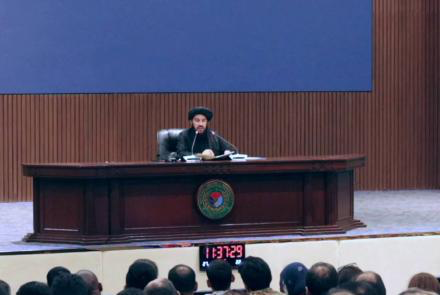
Sardar Ahmad Shakib, the Islamic Emirate’s ambassador in Islamabad, described Afghanistan and Pakistan as interconnected countries during remarks at Pakistan’s National Defence University, emphasizing the deep ties between the peoples of the two countries.
He said Afghanistan does not want its territory to be used against Pakistan, but Pakistan’s security concerns should not become a justification for military action on Afghan soil.
Shakib added that security allegations should be specific, precise, and based on clear information and concrete cases.
Shakib said: “Afghanistan does not want its territory to be used against Pakistan. At the same time, Afghanistan cannot accept Pakistan’s security concerns being used as a justification for military action on Afghan soil. If Afghanistan is expected to cooperate on specific concerns, Afghanistan also wants to directly discuss its own security concerns with Pakistan.”
In another part of his remarks, Shakib stressed that Afghanistan’s relations with one country should not be interpreted as a position against another. He said maintaining relations with other countries is the right of every independent state.
“Pakistan has its national interests, and Afghanistan has its national interests. Being neighbors does not mean that one country must approve all the strategic choices of the other. Rather, it means that both countries should be able to make independent decisions while also taking into account each other’s legitimate security and national concerns,” Shakib said.
Meanwhile, Maulana Fazlur Rehman, leader of Pakistan’s Jamiat Ulema-e-Islam, criticized the government’s policies, saying Pakistan’s relations with India, Afghanistan, China, Iran, and Bangladesh should not be determined solely by the government’s perspective.
He added that disagreement with government policies should not be considered an act of betrayal and that the consequences of Pakistan’s security and foreign policies should also be discussed and assessed.
Fazlur Rehman said: “It is not the case that whatever you say and whatever path you determine, we simply say, ‘We hear and obey.’ No, that is not the case. What should our relations in the region look like? What should our relations with India, Afghanistan, China, Iran, and Bangladesh be? On all these issues, a political party has its own position. But if its position differs from yours, do you label it a traitor? Have some shame; this is not right.”
Relations between Afghanistan and Pakistan have faced growing tensions since October last year.
During this period, several Pakistani political figures and religious scholars have criticized Islamabad’s policies toward Afghanistan and emphasized resolving differences through dialogue and diplomacy.