Iran attacks US base in Jordan, ships near Hormuz after tankers sunk
Iran’s Revolutionary Guard said it fired ballistic missiles at a base in Jordan used by the U.S. military and attacked 10 ships on Wednesday, after the U.S. said it had destroyed five Iranian oil tankers, in a sharp escalation of the six-month-old war, Reuters reported.
Increased attacks by both the U.S. and Iran have shattered a month of relative calm, hitting military, shipping and energy assets, sending oil prices surging and drawing in regional allies in recent days.
The Americans said they destroyed five Iranian oil tankers on Tuesday. The U.S. military’s Central Command posted video of the strikes, which it called a response to Iran’s Islamic Revolutionary Guard Corps (IRGC) targeting a U.S. Navy warship twice with ballistic missiles over the previous two days. No Americans were harmed, the U.S. said.
“Iran continues to try to hit U.S. naval ships, and for every time they do that or try to do that, they’re going to lose tankers,” U.S. Secretary of State Marco Rubio told reporters during a visit to Colombia.
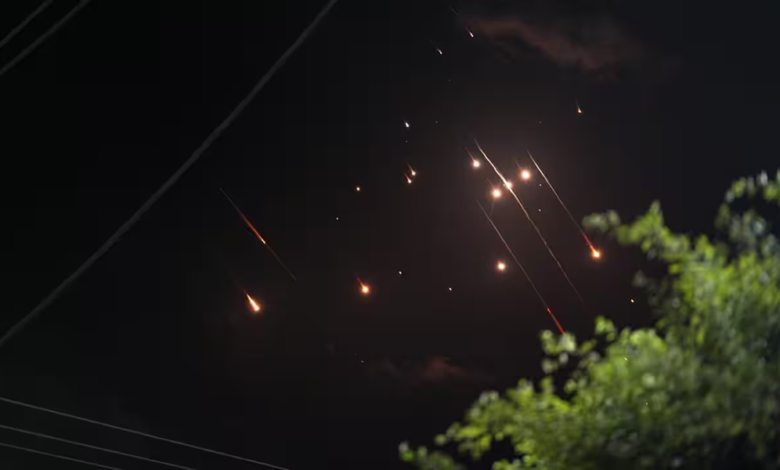
Iran then carried out a ballistic missile attack on a base used by U.S. forces near Al Azraq in Jordan, according to an IRGC statement on state media.
Although Iran said its missiles inflicted heavy damage, Jordan said its air defences intercepted 18 of the 20 Iranian missiles, with two falling in unpopulated areas, and that there were no casualties. A U.S. official said Iran’s strikes in Jordan were ineffective and all American troops were accounted for.
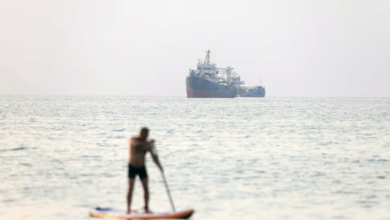
The IRGC said on Wednesday it also attacked 10 ships, including two U.S. vessels and eight oil tankers, attempting to cross a “prohibited and unsafe” area of the Strait of Hormuz, a vital energy conduit largely choked off by Iranian attacks.
Iran has targeted U.S. assets and allies in the region throughout the war, including in Jordan several times, killing at least two U.S. military personnel during one strike in July.
Iran has also threatened oil tankers in Kuwaiti and Bahraini ports, according to a statement carried by state media. A maritime security source reported a liquefied natural gas tanker was damaged in the Emirati port of Khor Fakkan, though it was unclear who was responsible.
Oil prices extended gains in early trade on Wednesday with Brent crude nearing $100 a barrel on market concerns over the disruption of oil tanker traffic in the Strait of Hormuz. Recent attacks by Yemen’s Iran-aligned Houthis on top energy producer Saudi Arabia have added to supply concerns, read the report.
On Tuesday, Houthis launched an attack on several cities in Saudi Arabia, further undermining regional stability.
The Houthi attacks wounded 73 people and set oil installations ablaze in what appeared to be a major expansion of the conflict, which began on February 28 with joint U.S.-Israeli attacks on Iran.
The Houthis, who control most of Yemen’s populated areas, including the capital, have further pressured U.S. allies by periodically disrupting shipping on the other side of the Arabian Peninsula, at the entrance to the Red Sea.
They said they had launched a broad operation deep into Saudi territory, using drones and missiles to strike a Saudi air base in the southern city of Khamis Mushait as well as Saudi state oil company assets in the cities of Abha, Najran and Jazan.
Saudi authorities reported blazes at the sites and said women and children were among the wounded.
Saudi Arabia has led an Arab coalition battling against the Houthis in Yemen for more than a decade, after the Houthis drove the Yemeni government from the capital. That war had calmed in recent years, but a ceasefire there has broken down.
The wider war in the Gulf has turned into a test of wills between the U.S. and Iran, with each side hoping that economic pressure from competing blockades will force the other to yield.
Washington is trying to increase the flow of oil to world markets by guiding ships through the Strait of Hormuz, while cutting off Iran’s exports with a blockade, Reuters reported.
Central Command said the tankers it destroyed on Tuesday were part of a shadow network that funds the IRGC and its regional proxies. Iran has long supported what it calls an “Axis of Resistance”, which includes the Palestinian Islamist group Hamas, Lebanon’s Hezbollah, Iraqi Shi’ite militias and the Houthis.