IRC: Kabul Could Run Out of Water by 2029
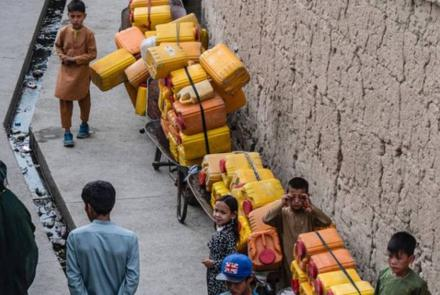
Flora Alexander, Executive Director of the International Rescue Committee (IRC) in the UK, has warned about the future of Kabul’s water resources following a week-long visit to Afghanistan.
Alexander said Kabul could become the first modern city in the world to run out of water by 2029.
She stressed that millions of Afghans already need access to clean water and basic services and that the international community should not abandon Afghanistan under these circumstances.
Flora Alexander, Executive Director of the IRC UK, said: “Kabul is predicted to become the first modern city in the world to run out of water by 2029. So I hope your viewers understand that turning away from the people of Afghanistan is not the right thing for the international community to do.”
Meanwhile, some Kabul residents have also complained about declining access to water and called for greater attention to the problem.
A Kabul resident said: “To address people’s problems, the government should extend water pipelines to people’s homes so they can be relieved of this problem.”
The spokesperson for the Islamic Emirate said the Ministry of Energy and Water and the Ministry of Rural Rehabilitation and Development, along with other relevant organizations, are working to manage water resources.
According to him, nearly 400 new water reservoirs have been put into operation to collect water from snow and rainfall in districts and help replenish groundwater resources.
Zabihullah Mujahid also called on the international community not to politicize Afghanistan’s environmental and humanitarian issues and to cooperate in addressing them.
Zabihullah Mujahid, spokesperson for the Islamic Emirate of Afghanistan, said: “Relevant organizations are carrying out extensive work to address water challenges. The Ministry of Energy and Water and the Ministry of Rural Rehabilitation and Development, together with other relevant organizations, are working to ensure that every district has a water reservoir. Nearly 400 new reservoirs have been activated so that water from snow and rainfall can be collected in the districts and groundwater resources can be replenished. Work has also been carried out in other areas, including expanding green spaces. We call on the international community not to politicize our environmental issues and to cooperate in this area from a humanitarian perspective.”
According to United Nations estimates, growing urbanization in Afghanistan could also increase pressure on water resources, with nearly half of the country’s population expected to live in urban areas by 2049.