Afghanistan’s economy grows despite rising food insecurity and water crisis: World Bank
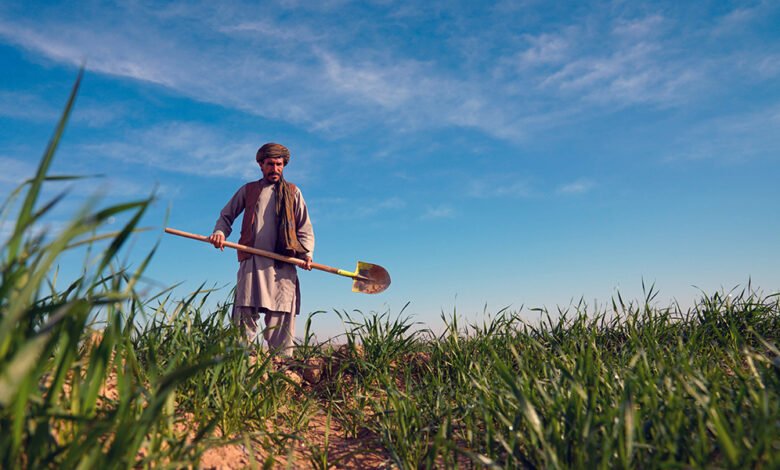
Afghanistan’s economy is projected to expand by three percent in 2026, supported largely by a strong agricultural harvest. However, declining household incomes, rising food prices and worsening water shortages continue to threaten livelihoods, according to the World Bank’s latest economic assessment.
In its Fall 2026 Afghanistan Development Update, released on November 18, the World Bank said economic output per capita is expected to fall by 3.3 percent for the third consecutive year, as population growth is forecast to reach 6.6 percent.
The report highlighted growing pressure on household finances, with fewer employment opportunities and higher food costs reducing purchasing power. In September, casual labourers recorded 14 percent fewer working days than a year earlier, while their weekly earnings could purchase 27 percent less wheat flour.
Despite an improved harvest, an estimated 15.9 million people faced acute food insecurity during September and October 2026, according to the Integrated Food Security Phase Classification (IPC).
The World Bank also reported a 10.2 percent increase in domestic revenue during the first half of 2026, driven by higher tax and non-tax collections despite declining customs duties. However, public investment remains limited, with capital expenditure projected at just 1.3 percent of gross domestic product.
Trade disruptions are adding to the economic challenges. The closure of border crossings with Pakistan has forced around 97 percent of Afghanistan’s imports to be routed through Central Asia and Iran. Exports also fell by 15.1 percent between April and September compared with the same period last year.
The report raised particular concern over Afghanistan’s worsening water crisis, estimating that the country has lost approximately 4.9 billion cubic metres of freshwater reserves annually since 2003.
In Kabul, groundwater extraction is occurring at nearly four times the rate of natural replenishment, placing increasing pressure on already limited water resources.
The crisis also threatens rural livelihoods, with agriculture accounting for 46 percent of employment and approximately 95 percent of the country’s water withdrawals.
Looking ahead, the World Bank forecasts economic growth of 3.3 percent in 2027 and 3.5 percent in 2028. However, despite the projected recovery, output per capita in 2028 is expected to remain around 7 percent below its 2024 level.
The report warned that several risks could undermine the outlook, including a poor harvest, further disruption to trade routes, another large influx of returning Afghans and deeper reductions in international assistance.
It also called for more reliable trade corridors, expanded employment opportunities in provinces receiving large numbers of returnees, and the restoration of access to education and employment for women and girls.
Addressing the water crisis, the World Bank emphasized the need to restore essential water and sanitation services, repair irrigation infrastructure and strengthen the protection of watersheds and groundwater reserves.