Khalilzad calls on Pakistan to explain why talks with Afghanistan have failed
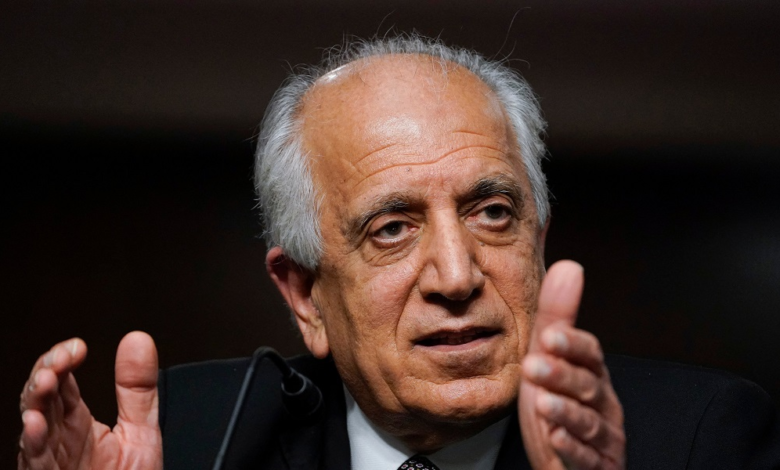
Former U.S. special envoy for Afghanistan, Zalmay Khalilzad, has questioned Pakistan’s assertion that diplomatic efforts with Afghanistan have failed, urging Pakistani lawmakers to seek greater transparency from their government regarding negotiations with Kabul.
In a statement posted on social media, Khalilzad referred to a recent session of Pakistan’s National Assembly in which several lawmakers highlighted the costs and risks associated with Islamabad’s reliance on force rather than diplomacy to address its disputes with Afghanistan.
The core disagreement between the two countries centers on mutual security allegations. Pakistan maintains that Tehrik-i-Taliban Pakistan (TTP), which has carried out numerous attacks inside the country, enjoys sanctuary and support in Afghanistan. Afghan authorities, meanwhile, accuse Pakistan of providing refuge and support to Islamic State Khorasan Province (ISIS-K) and other groups hostile to Afghanistan.
Pakistan’s Defense Minister, Khawaja Muhammad Asif, recently argued that diplomatic engagement with the Islamic Emirate had failed because Kabul had not provided sufficient assurances and commitments regarding Pakistan’s security concerns. However, according to Khalilzad, the minister did not specify what commitments Pakistan had requested or why Afghanistan’s responses were considered inadequate.
Khalilzad said he sought clarification from Afghan officials regarding negotiations between the two countries. According to those officials, Afghanistan has offered to provide written security guarantees while requesting reciprocal commitments from Pakistan. They also said Kabul has worked through bilateral mechanisms, including the Joint Coordination Committee (JCC), to address security issues and has accepted the principle of third-party participation in verification mechanisms.
Afghan officials further stated that the Islamic Emirate has issued a religious decree prohibiting Afghan citizens from participating in attacks inside Pakistan, relocated Pakistani refugees who had been settled near the Durand Line during Afghanistan’s previous government, and participated in both official and semi-official dialogues mediated by various countries.
They also claimed that Afghan authorities have taken verifiable action against individuals and groups that violated Afghanistan’s policy of preventing the use of its territory against other nations.
Khalilzad argued that Pakistani lawmakers who favor diplomacy should press their government to pursue an agreement under which neither Afghanistan nor Pakistan would permit their territory to be used by groups or individuals to threaten the other’s security.
“If accurately described in the points above, Afghanistan seems ready for a serious solution,” Khalilzad said. He questioned why Pakistan continues to insist that diplomacy has failed and called on Islamabad to explain its specific objections to Afghanistan’s proposals.
“The Pakistani people and Parliament have the right to know,” he added.