Economic Commission approves expansion of Sher Khan port to boost regional trade
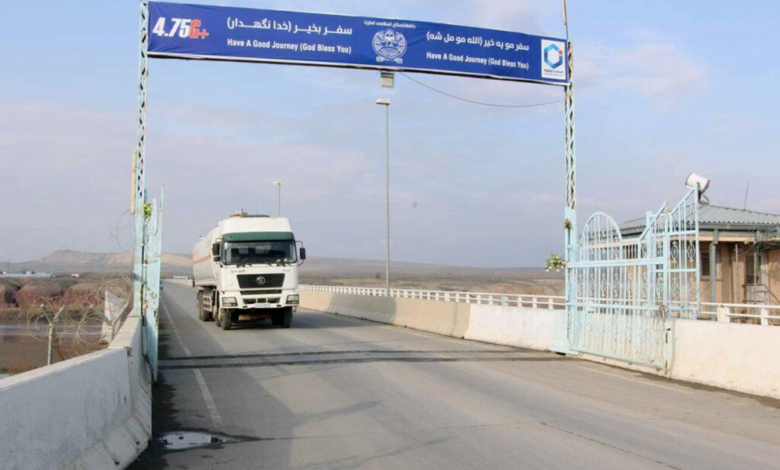
Afghanistan’s Economic Commission has approved a series of measures to expand the capacity of Sher Khan Port in an effort to strengthen trade with Tajikistan, Kyrgyzstan, and China.
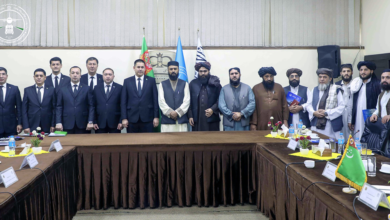
The commission, chaired by Deputy Prime Minister for Economic Affairs Mullah Abdul Ghani Baradar, met on Tuesday to review proposals submitted by the Ministry of Transport and Civil Aviation aimed at increasing regional trade through the northern border crossing.
According to the approved plan, the Ministries of Finance, Interior, and other relevant institutions will develop new infrastructure at Sher Khan Port and expand existing facilities to accommodate growing trade volumes.
The commission also approved extending the port’s operating hours in coordination with Tajikistan to facilitate the movement of a greater number of commercial vehicles and improve cross-border trade.
In addition, the Ministry of Finance was instructed to allocate funding for the construction of a logistics center at Sher Khan Port. The facility will provide customs services, warehousing, cargo handling, and freight-loading operations to streamline trade activities.
The meeting also directed the Ministry of Public Works to construct the necessary railway infrastructure inside Afghanistan to activate the ECO railway corridor, a regional transport initiative linking Iran, Afghanistan, Tajikistan, and Kyrgyzstan under the framework of the Economic Cooperation Organization (ECO).
Separately, the commission decided that several state-owned entities will transfer their scrap iron to the National Development Company, which will process the material into standard steel reinforcing bars (rebar) for use in major government infrastructure projects.
The commission also endorsed 37 national standards and 12 testing methods proposed by the National Standards and Quality Authority. The standards cover agricultural products, food items, pharmaceuticals, construction materials, telecommunications and electrical equipment, chemicals, plastics, medical equipment, and several other sectors. Officials said the standards were developed in line with Afghanistan’s current needs and international benchmarks.
The meeting concluded with the presentation of follow-up reports on a number of ongoing issues, and relevant institutions were given the necessary directives. All decisions adopted during the session have been forwarded to the Office of the Supreme Leader for final approval.