OCHA Calls for Support as Afghan Returns From Pakistan Continue
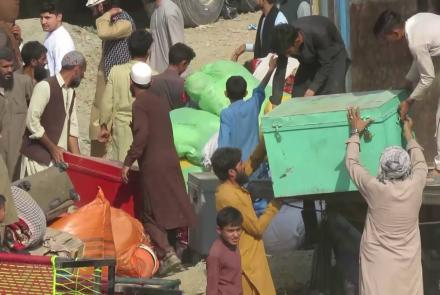
After years of living in Pakistan, thousands of Afghan families have now been forced to leave their homes and return to Afghanistan, a process that human rights organizations say violates the principle of non-refoulement under international law.
One family that recently returned to Afghanistan described the difficulties of leaving their home, losing their belongings, and starting life over again in the country.
Noor Agha, a returnee from Pakistan, said: “We could not leave the house there. They would open our door, and once they arrested my father and took 50,000 or 60,000 from us.”
Another returnee said: “There was a lot of fear there. They were arresting everyone, and the situation was very bad. They did not even care whether we had documentation or not.”
Meanwhile, the United Nations Office for the Coordination of Humanitarian Affairs (OCHA) says returning to Afghanistan is only the beginning of the journey and that more than 2.7 million returnees this year require immediate humanitarian assistance.
According to OCHA, these families need safe shelter, livelihood opportunities, education, and healthcare services to rebuild their lives, and continued humanitarian assistance is vital to meeting their needs.
Abdul Zahoor Modaber, an economic affairs expert, said: “We have two types of migrants. Some are productive individuals who can contribute because they possess physical and intellectual capabilities. They represent an opportunity for Afghanistan, and we should make use of their potential.”
According to United Nations reports, more than six million Afghan migrants have returned to the country from Iran and Pakistan since 2023. It is also projected that nearly 2.8 million more migrants will return to Afghanistan by the end of this year, further highlighting the need for extensive and sustainable support to resettle returnees and meet their basic needs.