Afghanistan Reconstruction: Billions Spent, Major Projects Left Unfinished
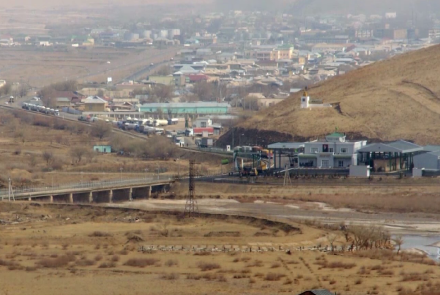
During the 20-year presence of US forces and the international community in Afghanistan, billions of dollars were spent on reconstruction and development.
During the same period, several projects were launched with the aim of turning Afghanistan into a regional transit corridor for energy, electricity and goods.
Despite these investments, however, many of the projects were either left incomplete or failed to deliver the expected results.
According to the US Special Inspector General for Afghanistan Reconstruction (SIGAR), nearly $145 billion had been appropriated for reconstruction and related activities in Afghanistan by June 2021.
$145 billion allocated for Afghanistan’s reconstruction and development
$88.6 billion – Security
$36.3 billion – Governance and development
$4.2 billion – Humanitarian assistance
$15.9 billion – Program administration costs
But the issue was not only how much money was spent. How these resources were used and how effective they were also remained under scrutiny.
Administrative corruption was one of the major challenges during that period. In 2019, Afghanistan ranked 165th out of 180 countries on the Corruption Perceptions Index.
Zohuruddin Zahir, a political analyst, said about what he described as administrative corruption over the past 20 years: “Administrative corruption and the injustices committed by Western countries were among the problems that emerged in our country during those 20 years. The situation of the people deteriorated, and this ultimately harmed the United States as well.”
Alongside its domestic challenges, Afghanistan sought to use its geographical position to connect Central, South and West Asia.
CASA-1000 was one of the most important initiatives—a project worth nearly $1.2 billion designed to transmit surplus electricity from Tajikistan and Kyrgyzstan to Pakistan through Afghanistan.
CASA-1000 – One of Afghanistan’s largest energy projects
Cost: $1.2 billion
Goal: Transmit electricity from Central Asia to Pakistan through Afghanistan
Launched: 2013
Work in Afghanistan suspended: September 2021
TAPI was another major regional project, designed to transport natural gas from Turkmenistan to Pakistan and India through Afghanistan.
Construction of the Afghan section was officially launched in 2018, but progress remained limited until the end of the republic.
TAPI – Afghanistan’s most ambitious gas project
Construction of Afghan section launched: 2018
Goal: Transport Turkmen gas to Pakistan and India
Status by the end of the republic: Limited progress
In the transport sector, the Khaf-Herat railway was pursued to connect Afghanistan to the regional rail network, with its Afghan section inaugurated in 2019.
Khaf-Herat Railway – A major step toward regional transit connectivity
Construction launched: 2019
Afghan section inaugurated: 2019
Goal: Connect Afghanistan to the regional railway network
Hasibullah Mohibzada, an economic analyst, said about why some projects were not completed: “Political, economic and security stability are among the fundamental requirements for completing projects. Unfortunately, we did not have such stability during the past 20 years, and this was one of the most significant factors preventing some projects from being implemented.”
Despite these challenges, Afghanistan’s economy recorded significant growth during the same period.
According to the World Bank, Afghanistan’s economy grew by an average of more than 7% annually from 2000 to 2019, while gross domestic product increased by 180%.
However, this growth remained heavily dependent on foreign assistance. Aid during this period averaged nearly 60% of Afghanistan’s GDP and stood at around 45% in 2019.
Abdul Shakoor Hadawal, an economic analyst, said about what he described as the mismanagement of billions of dollars in Afghanistan over the past 20 years: “A great deal of money came to Afghanistan, but poor management of these resources meant that the funds were not effectively spent in the right sectors and on infrastructure projects that could have contributed to stronger economic growth.”
The experience of these two decades shows that investment and the implementation of a number of projects alone are not enough to turn Afghanistan into a regional economic crossroads. Security, effective governance, sustainable infrastructure, regional cooperation, and stronger domestic production and exports are also essential.