Vice and Virtue Ministry Rejects Women’s Rights Violation Claims
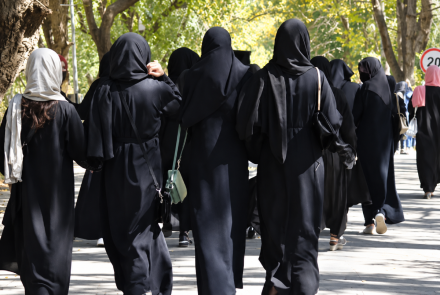
The spokesperson for the Ministry of Vice and Virtue says allegations of violations of women’s rights in Afghanistan are baseless and that the Islamic Emirate has paid special attention to women’s rights.
Saif-ul-Islam Khyber emphasizes that the rights of women and girls have been ensured within the framework of Sharia.
Saif-ul-Islam Khyber, spokesperson for the Ministry of Vice and Virtue, said: “Special attention has been paid to women’s rights, and women now enjoy rights that are unprecedented in Afghanistan’s history.”
Recently, the UN Women Director of the Policy, Programme and Intergovernmental Support Division said that restrictions on women’s and girls’ education, employment and participation in public life have left Afghanistan facing one of the most severe crises in this area.
Sarah Hendriks, the UN Women Director of the Policy, Programme and Intergovernmental Support Division, said: “Afghanistan, I believe, is experiencing one of the most severe crises for women, particularly girls, anywhere in the world. Women’s presence and participation in public life matter. Women’s political power also matters and can change the course of women’s and girls’ lives. At the United Nations, we continue to support Afghan women and emphasize that their rights and participation must not be overlooked. Their rights cannot be erased or bargained away.”
Meanwhile, a women’s rights activist says the continuation of these restrictions affects not only the lives of women and girls but also the country’s human capital and development.
Tafsir Siyahposh, a women’s rights activist, said: “Regarding human rights, particularly the rights of women and girls, the concern among the younger generation is that if the situation continues as it is, the future will remain uncertain for many of them. We want the closed doors of schools and universities to reopen and employment opportunities to be provided for today’s generation so that concerns about the future can be reduced.”
Girls deprived of education, meanwhile, say women’s literacy is important for the future of families and generations to come.
Marwa Hashemi, a student deprived of education, said: “When a mother is educated, she can build a strong foundation at home and raise educated children.”
It has now been five years since girls above grade six were barred from education, nearly four years since women were barred from universities, and more than three years since restrictions were imposed on women working in some institutions.
The United Nations Children’s Fund (UNICEF) has also said that more than 2.6 million girls have been deprived of secondary education since 2021.