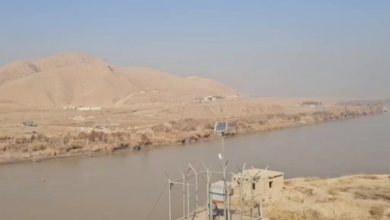
Afghanistan Builds 150 Check Dams to Improve Water Management
Water resource management and its effective utilization are among Afghanistan’s fundamental needs.
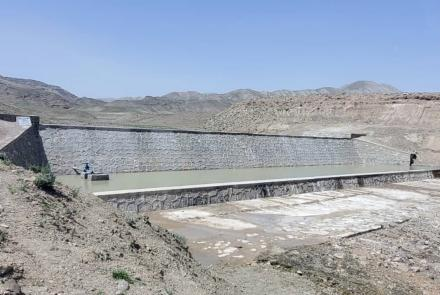
The Ministry of Energy and Water says that 150 check dams have been constructed over the past five years at a total cost of 466.6 million Afghanis.
The dams were built to replenish groundwater, control surface water, combat drought, prevent floods, and generate energy.
Matiullah Abid, spokesperson for the Ministry of Energy and Water, said: “Over the past five years, 150 check dams have been constructed at a total cost of 466.6 million Afghanis. The purpose of these dams is to recharge groundwater, control surface water, combat drought, and prevent floods.”
According to the ministry, the newly constructed check dams have created irrigation opportunities for 7,309 hectares of agricultural land.
The Ministry of Energy and Water also reports the construction and development of five major dams, including the Shah wa Arus Dam in Kabul, Omari Dam in Zabul, Pashdan Dam in Herat, Kamal Khan Dam in Nimroz, and Bakhshabad Dam in Farah. These projects play an important role in managing the country’s water resources and ensuring their effective utilization.
Tahir Momandzai, a water management expert, said: “Each of Afghanistan’s four river basins has its own characteristics, and based on these characteristics, their water resources can be used for agriculture and energy production. For example, the water of the Kunar River can be utilized for both electricity generation and agriculture.”
Meanwhile, the Ministry of Agriculture, Irrigation and Livestock has also emphasized the importance of water resource management and its effective use in agriculture.
Sher Mohammad Hatami, spokesperson for the Ministry of Agriculture, Irrigation and Livestock, said: “Afghanistan faces challenges regarding agricultural water supplies. To reduce the impact of these challenges, improve water management, and ensure effective water use in agriculture, the ministry has undertaken the construction of check dams.”
The Qosh Tepa Canal is also considered one of the country’s major water projects. With the completion of its sections, irrigation opportunities have been created for thousands of hectares of agricultural land.
Alongside these projects, the management of the Kunar River’s water resources has long been a demand of local communities.
Effective utilization of the river’s water could contribute significantly to agricultural irrigation and electricity generation.