Fazl-ur-Rehman Criticizes Pakistan’s Policies Amid China’s Growing Distrust
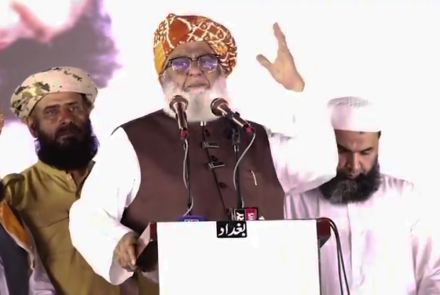
Maulana Fazl-ur-Rehman, leader of Pakistan’s Jamiat Ulema-e-Islam (JUI-F), has criticized his government’s policies toward Afghanistan, saying the conflict has led to the closure of western trade routes, disrupted commerce, and damaged people’s livelihoods.
He also said that China has lost confidence in Pakistan, adding that Beijing and Moscow are concerned about Pakistan’s agreements with the United States and the presence of foreign powers in the region.
Fazl-ur-Rehman further warned that Pakistan’s government, by facilitating American investment in mineral resources in tribal areas, is putting the region’s resources at risk of foreign control.
Maulana Fazl-ur-Rehman, leader of JUI-F, said: “The conflict with Afghanistan has brought trade through Pakistan’s western crossings to a halt, destroying businesses and people’s sources of income. China has lost confidence in us. You have made deals with the Americans, effectively allowing them to take control of our resources on our own soil and opening the door for their investment. Even if you receive a few coins in return and are satisfied with that, remember that this policy is no longer acceptable to us. China and Russia also have concerns about this. You are bringing foreign forces into the region.”
He also stressed that the Pakistani government’s policies have prompted some Pakistani investors to move their capital out of the country.
“Why are investors coming to Afghanistan to invest while Pakistani investors are taking their money out of Pakistan? Investors around the world consider three things before investing. First, they invest where there is peace and security. Second, where contracts and transactions are transparent. Third, where the rule of law is upheld. You have completely destroyed this country’s economy, yet you proudly claim that you are saving it,” Maulana Fazl-ur-Rehman said.
Tensions between Kabul and Islamabad escalated following attacks on Afghanistan by Pakistan’s military.
Although Afghanistan and Pakistan held talks in Urumqi, China, on April 7, 2026, and Moscow has repeatedly expressed its readiness to mediate if requested by both sides, these diplomatic efforts have yet to produce tangible results.
Meanwhile, trade between Afghanistan and Pakistan has remained largely suspended since October 12, 2025.
Sayed Ebadullah Sadiq, a political analyst, said: “Russia and China are working to ensure peace and stability not only between Afghanistan and Pakistan but across the region, so that economic, transit, trade, security and other issues in Asia can be properly managed and solutions can be found to existing challenges.”
Mohammad Nabi Afghan, an economic analyst, said: “If we look closely, Pakistan has disputes with all its neighbors. It has not only lost trade with Afghanistan but also access to the entire Central Asian market. It has lost its exports and economic benefits.”
The continued closure of trade crossings between Afghanistan and Pakistan, the suspension of commerce, and Islamabad’s policies toward Kabul have also drawn criticism from Pakistani politicians and business representatives.
Asad Qaiser, a member of Pakistan’s National Assembly, previously said that the closure of trade crossings had harmed Peshawar’s economy and industrial sector.
Similarly, participants at a meeting in Peshawar in September called for separating trade from political and security disputes and resolving tensions through dialogue.