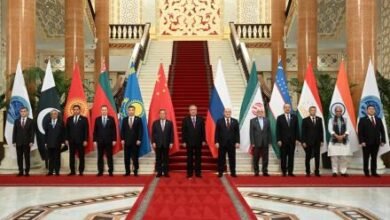
China’s Development Experience and Its Lessons for Afghanistan
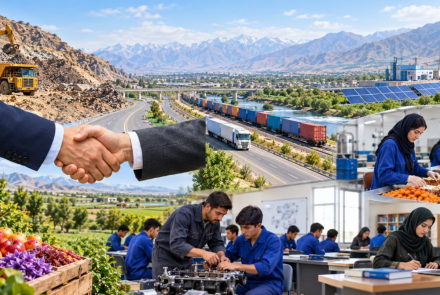
An Afghan Researcher’s Perspective Introduction China’s transformation into a major global economic power offers useful lessons for countries seeking to strengthen their productive capacity and improve living standards. Its progress has been driven by economic reforms, industrial development, infrastructure investment, international trade, and technological advancement.
For Afghanistan, the central question is how to adapt relevant elements of China’s experience to its own economic and institutional conditions. Rather than copying China’s political or economic model, Afghanistan should identify practical approaches that support domestic production, employment, skills development, and sustainable investment.
1. The Foundations of China’s Economic Development Since the late 1970s, China has gradually reformed its economy, expanded international trade, attracted foreign investment, and developed its manufacturing sector. These changes helped integrate the country into global supply chains and establish its position as a major industrial producer. China has also expanded its capabilities in electric vehicles, batteries, solar energy, telecommunications, and advanced manufacturing. Its experience demonstrates the importance of combining infrastructure, industrial policy, technical education, and access to international markets. However, China faces structural challenges, including an aging population, difficulties in the property sector, debt pressures, and the need to strengthen domestic consumption. For Afghanistan, an important lesson is that natural resources alone do not guarantee economic development. Sustainable growth requires investment in processing industries, technical skills, infrastructure, and competitive domestic businesses.
2. Afghanistan–China Economic Cooperation Afghanistan and China have opportunities to expand cooperation in mining, agriculture, energy, transportation, telecommunications, and vocational education. Afghanistan’s geographical position between Central and South Asia also offers potential for regional trade and transit. Realizing these opportunities requires commercially viable projects, transparent agreements, and clear economic objectives. Investment should be assessed not only by its financial value but also by its contribution to employment, domestic production, skills transfer, and public revenue. Afghanistan should therefore prioritize partnerships that strengthen its productive capacity rather than create long-term dependence on imported goods, external expertise, or unsustainable financing.
3. Mineral Resources and Industrial Development Afghanistan possesses significant mineral resources, including copper, iron ore, and other deposits that may support future industrial development. Their economic value depends on more than extraction. Reliable energy, transportation, technical expertise, processing facilities, and effective regulation are also necessary. China’s experience in mining, metallurgy, and manufacturing could provide opportunities for technical cooperation and investment. However, mineral projects must be evaluated according to their commercial viability, environmental impact, water requirements, employment potential, and contribution to public revenue. Where economically feasible, Afghanistan should encourage domestic processing and related industries. This approach could increase local value addition, create skilled jobs, and reduce dependence on exporting unprocessed materials. Transparent contracts and effective oversight are essential to ensuring that mineral development serves the broader economy.
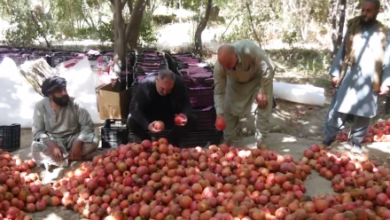
4. Agriculture and Value-Added Production Agriculture remains an important source of employment and income in Afghanistan. Products such as dried fruits, fresh fruits, saffron, and other agricultural goods offer export opportunities, but inadequate storage, limited processing capacity, transport constraints, and difficulties meeting international standards restrict their potential. Cooperation with China could support modern agricultural equipment, irrigation efficiency, cold-storage facilities, food processing, packaging, and technical training. Processing agricultural products domestically can increase their market value and expand employment beyond farming. Better packaging, quality control, and access to international distribution networks could also improve the competitiveness of Afghan exports. Agricultural development should therefore be linked to manufacturing, logistics, and export strategies rather than treated as a separate sector.
5. Infrastructure and Regional Connectivity China’s infrastructure development has supported industrial growth and improved connections between production centers and markets. Roads, railways, electricity networks, and logistics facilities can reduce transportation costs and facilitate trade. Afghanistan’s location offers potential for greater economic integration with Central Asia, South Asia, and China. However, realizing this potential requires reliable transport links, efficient customs procedures, dependable electricity, and a predictable environment for commercial activity. Major infrastructure projects should undergo rigorous feasibility assessments. Their expected economic returns, financing arrangements, maintenance costs, and environmental effects must be considered before implementation. Cooperation with China should also encourage the participation of Afghan companies, the training of local workers, and the transfer of technical knowledge. These measures would help ensure that infrastructure investment generates broader domestic economic benefits.
6. Human Capital and Technical Education A skilled workforce is essential for industrial development and the effective use of foreign investment. Afghanistan needs professionals in engineering, mining, agriculture, energy, information technology, and industrial management. China could contribute through scholarships, vocational training, academic exchanges, and technical cooperation. Such programs would be most effective if they were linked to clearly identified labor-market needs. Afghanistan should also strengthen its domestic educational and professional institutions so that trained graduates can apply their skills locally. Technical education, practical experience, and collaboration between educational institutions and businesses would help address skills shortages.
7. Managing the Risks of Economic Cooperation China’s development experience cannot be transferred directly to Afghanistan because the two countries differ in their institutions, economic structures, infrastructure, and administrative capacity. Economic cooperation must therefore be adapted to Afghanistan’s circumstances. Foreign investment should be governed by transparent procurement, enforceable agreements, responsible debt management, environmental safeguards, and clear rules for revenue distribution. Afghanistan should also maintain diversified economic relations with regional and international partners. A broader network of trade and investment relationships can expand market access, improve negotiating options, and reduce excessive dependence on any single country. The objective should be to use international cooperation to develop domestic capabilities and support long-term economic stability.
8. Practical Priorities for Afghanistan Several priorities could help Afghanistan apply relevant lessons from China’s experience:
1. Select viable projects: Prioritize investments in agriculture, energy, mining, manufacturing, and transportation based on independent technical and economic assessments.
2. Improve the investment environment: Strengthen contractual transparency, dispute-resolution mechanisms, regulatory predictability, and safeguards against corruption.
3. Develop local skills: Include vocational training, employment opportunities for Afghan workers, and technology transfer in major investment agreements.
4. Expand domestic production: Support agricultural processing and small and medium-sized enterprises that can create jobs and serve local and regional markets.
5. Strengthen public oversight: Monitor project performance, environmental impacts, public revenue, and financial obligations.
6. Promote regional trade: Improve transport connections, customs efficiency, and export standards to help Afghan businesses reach international markets. These priorities would provide a practical framework for turning international cooperation into measurable economic outcomes. Conclusion China’s development experience demonstrates the importance of economic reform, industrial capacity, infrastructure, technical education, and international trade. For Afghanistan, the most relevant lessons concern the development of domestic production, the effective use of natural resources, investment in skills, and the creation of conditions that encourage productive investment. China could be an important partner in these areas, but successful cooperation will depend on sound project selection, transparent agreements, responsible financing, and the ability of Afghan institutions and businesses to participate effectively. Afghanistan should adapt relevant lessons from China’s experience to its own circumstances, with particular emphasis on employment, value-added production, human capital, and regional connectivity. The objective should be to establish a more diversified and productive economy that makes effective use of the country’s resources and creates sustainable economic opportunities for its population.
Wahidullah Ghazikhil, Director, Center for Studies and Research (CSR)