Afghan and Iranian Gold Traders Call for Expanded Cooperation
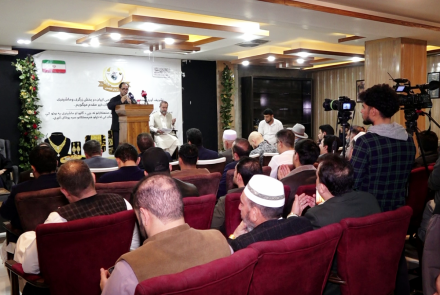
A meeting was held in Kabul following the arrival of 15 Iranian traders and gold industry representatives, bringing together officials from the Afghanistan Jewelers Union, traders from both countries and the acting head of the Iranian Embassy in Kabul.
Officials from the Afghanistan Jewelers Union said the country’s jewelry industry has grown by 80 percent over the past three years. They emphasized the need to expand cooperation in gold production, transfer advanced technology and machinery, increase investment and facilitate business activities between Kabul and Tehran.
Mohammad Bashir Ehsanzada, Head of the Afghanistan Jewelers Union, said: “Over the past three to five years, Afghanistan’s jewelry industry has achieved 90 percent self-sufficiency, with domestic production meeting most of the market’s needs. We ask the government to support us by providing land and electricity so that we can achieve the remaining 10 percent and become fully self-sufficient.”
Meanwhile, Alireza Bigdeli, Acting Head of the Iranian Embassy in Kabul, said that nearly 4,000 jewelry businesses are operating in Afghanistan and that Tehran supports expanding cooperation in the sector.
Emphasizing the need to facilitate travel for traders from both countries, Bigdeli added that a gold industry exhibition is scheduled to take place in Tehran next month, with Afghan jewelers expected to participate.
Alireza Bikdeli, Acting Head of the Iranian Embassy in Kabul, said: “We expect greater facilitation and support in this area, considering that these efforts are just beginning. Investment in Afghanistan is a relatively new opportunity for foreign investors, particularly Iranians, who are advanced in this sector. We hope the necessary facilities will be provided and the path for investment will be paved.”
Officials from the Afghanistan Chamber of Commerce and Investment also highlighted the importance of cooperation between Afghan and Iranian producers and traders in developing the jewelry industry.
They said stronger cooperation between Kabul and Tehran could help expand domestic production, increase trade and create employment opportunities.
Ahmad Shakeel Hazem, Deputy for Policy and Technical Affairs at the Executive Board of the Afghanistan Chamber of Commerce and Investment, said: “Cooperation should go beyond conventional buying and selling and move toward joint production. Collaboration in jewelry design and manufacturing, knowledge and technology transfer, the use of modern machinery, training skilled workers and cooperation in gold purity testing are among the most important areas to focus on.”
Meanwhile, several Iranian traders and manufacturers visiting Kabul highlighted the potential of Afghanistan’s gold market and emphasized the importance of transferring modern machinery and expanding production workshops.
They said their visits to Afghan markets had helped identify promising opportunities for joint cooperation in the gold industry.
Ali Asghar Salehi, an Iranian jewelry machinery manufacturer, said: “We do not view Afghanistan merely as a trading market, but as a commercial and industrial partner with whom we can build a better future together.”
Maryam Rezaei, an Iranian gold trader, said: “We invite you to participate in our exhibition in Tehran. Just as we have learned about the needs of your market, we want you to become familiar with our latest technologies.”
The meeting comes as officials from the Afghanistan Jewelers Union report increased gold production capacity in the country and call for greater support for the industry, particularly in providing electricity, establishing standard production workshops and improving access to advanced machinery.