Islamic Emirate, Iran Agree to Introduce 24-Hour Customs Operations
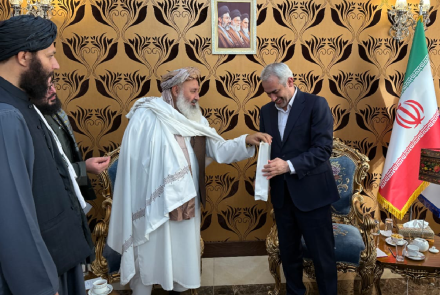
The Islamic Emirate and Iran have agreed to introduce 24-hour customs operations, increase the movement of cargo trucks, and facilitate trade between the two countries.
The plan is expected to be implemented in its first phase at the Islam Qala border crossing starting next Saturday.
The Ministry of Finance says the agreement was reached during a meeting between Mohammad Nasser Akhund, the Islamic Emirate’s Minister of Finance, and Seyed Ali Madanizadeh, Iran’s Minister of Economic Affairs and Finance, in Tehran.
The Afghan finance minister, who traveled to Iran to expand customs and trade cooperation, also discussed connecting the customs systems of Afghanistan and Iran, increasing the number of trucks crossing the border, and preventing goods smuggling.
Other topics discussed during the meeting included eliminating unofficial fees at border crossings, facilitating Afghan exports, and reducing waiting times for cargo trucks at border crossings.
Ramesh Ayar, an economic analyst, said: “Afghanistan shares its longest border with Iran, and the more trade, economic, and transit relations between the two countries expand, the more we can import essential goods from Iran at lower costs.”
Meanwhile, the Afghanistan Chamber of Commerce and Investment has welcomed the agreement between Kabul and Tehran to introduce round-the-clock customs operations, saying the decision could facilitate the transportation of goods and trade between the two countries while increasing the volume of shipments.
Ehsanullah Ehsan, the chamber’s head of public relations, said: “This measure could increase the volume of goods transported, prevent delays in commercial shipments, and ultimately boost trade between the two countries. The Afghanistan Chamber of Commerce and Investment supports this decision and considers it an important step toward expanding trade relations and commercial exchanges between Afghanistan and Iran.”
Afghanistan and Iran transport commercial goods through three official border crossings: Islam Qala in Herat, Pul-e-Abresham in Nimroz, and Sheikh Abu Nasr Farahi in Farah.
According to the Ministry of Finance, these customs facilities previously operated for more than 16 hours a day, depending on their workload.