Pakistan’s citrus export crisis deepens amid ongoing Afghanistan trade route closure
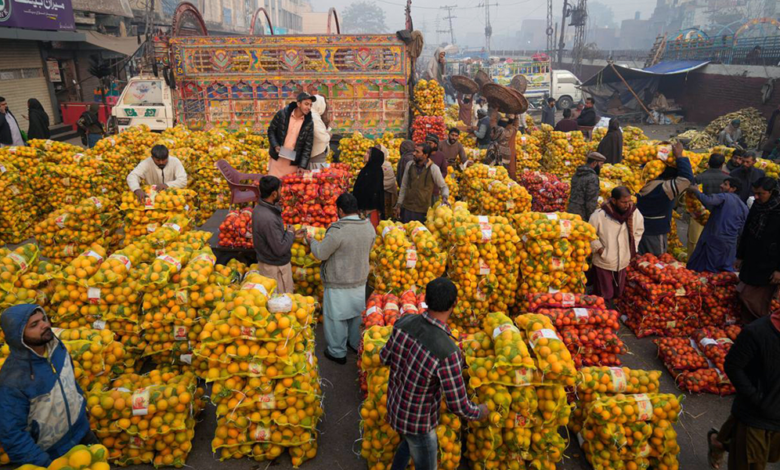
Pakistan’s citrus sector is facing a worsening export crisis as the closure of the Afghanistan crossing continues to block access to its largest market.
Despite the start of the 2025 citrus season, exports are set to fall further from an already steep decline — dropping from $211 million in fiscal year 2021 to just $92.5 million in fiscal year 2025.
Afghanistan, which absorbs around 60% of Pakistan’s citrus exports, has remained closed to trade since mid-October.
This year alone, Pakistan shipped 153,683 tonnes of citrus to Afghanistan, while exports through the Afghan transit route also supply Russia, Kazakhstan, and Uzbekistan. With that corridor shut, exporters warn that the bulk of Pakistan’s kinnow harvest could go unsold.
A temporary policy exemption now allows citrus shipments to transit through Iran, but exporters say volumes to Central Asia and Russia cannot compensate for the loss of the Afghan market.
The crisis, however, goes deeper than the current crossing closure situation. Pakistan’s citrus industry continues to suffer from long-standing structural challenges — including reliance on the outdated, seeded kinnow variety that makes up over 90% of exports.
Climate change, rising pest pressure, shrinking yields, and declining A-grade fruit quality have all eroded competitiveness. Yields have fallen to about six tonnes per acre, and nearly half of kinnow processing units have closed.
Global competitors such as Egypt, China, Spain, Morocco, and Brazil have overtaken Pakistan by introducing new seedless, high-yielding varieties with longer harvest windows. As profits shrink, farmers are abandoning citrus orchards: the cultivated area has dropped 16% in the past five years.
Experts say Pakistan must urgently invest in developing seedless, climate-resilient varieties and strengthen existing research centres. At the same time, trade officials need to diversify export destinations by securing new sanitary and phytosanitary agreements to reduce dependence on a single market.
Without structural reforms and diversified access, Pakistan’s signature fruit risks losing its place in global markets — and its farmers risk losing their livelihoods.