Achakzai Calls for Regional Talks on Afghanistan-Pakistan Tensions
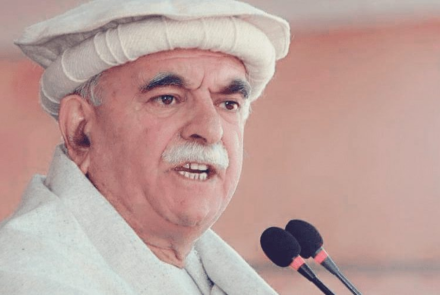
As relations between Kabul and Islamabad remain overshadowed by security allegations and political tensions, Mahmood Khan Achakzai, a Pakistani opposition leader, has stressed that the solution to the disputes lies not in pressure and confrontation, but in dialogue and diplomacy.
Speaking at a gathering in Quetta, Achakzai proposed that the United Nations take the initiative to convene a regional conference involving Afghanistan, Pakistan, China, Iran, Tajikistan, and Uzbekistan. He said the meeting should provide an opportunity for all parties to discuss their security concerns directly and help end the mistrust between the two neighboring countries.
Achakzai said: “A conference should be held with the participation of Uzbekistan, Tajikistan, China, Iran, Pakistan, and Afghanistan. If anyone claims that Afghanistan supports terrorism, they must provide evidence. Otherwise, we do not support such accusations.”
Meanwhile, a number of political analysts believe that the continued exchange of accusations between Kabul and Islamabad not only fails to reduce tensions but also negatively affects political relations, economic cooperation, and mutual trust between the two countries.
They emphasize that dialogue, diplomacy, and the establishment of joint mechanisms are the most effective ways to resolve disputes and address security concerns.
Political analyst Faiz Safi said: “The United Nations Charter calls on countries to resolve their disputes through peaceful means. Both sides should present the facts honestly and recognize each other’s rights and responsibilities.”
Other analysts also say that ensuring security along the hypothetical Durand Line and preventing the activities of armed groups require close cooperation and coordination between Kabul and Islamabad.
Military analyst Sadiq Shinwari said: “If these tensions continue, insecurity could spread across the entire region. Cooperation between Afghanistan and Pakistan in combating terrorist groups could play an important role in strengthening regional stability.”
Political analyst Abdul Rahman Shamal said: “Both sides—the Afghan government and Pakistan’s military authorities—must recognize the sensitivity of the issue and take the necessary measures to maintain security along both sides of the hypothetical Durand Line, ensuring that no terrorist group is allowed to operate in the region.”
These remarks come a day after the leader of Pakistan’s Jamiat Ulema-e-Islam (JUI) also criticized Islamabad’s policy toward Afghanistan, insisting that the differences between the two countries cannot be resolved through the use of force and should instead be settled through dialogue and diplomacy.